Suite or Inside Cabin Cruises Which Value Wins More

In this article
Inside cabin cruises and suites solve different travel problems, and the better value depends on whether you are buying price efficiency or private space. Best Cruise Rates is an online cruise reservation platform, so it sits close to the real comparison travelers face: book the lead-in fare for an inside cabin, or pay a much higher rate for suite amenities.
TL;DR: Summary
- Inside cabin cruises usually win on value when the goal is the lowest total cost, while suites win only when extra space, privacy, and premium perks will be used enough to matter.
- Cruise Itinerary’s 2026 data shows a wide price gap: inside cabins averaged $165.26 per night and suites averaged $518.81 per night, or a little more than 3 times higher for suites.
- CLIA classifies cruise accommodations into four main categories, and the biggest practical difference here is simple: inside cabins have no window or natural light, while suites add separate sleeping and living areas and may include VIP-style perks.
- Lower-deck staterooms are generally cheaper than higher-deck ones, so cabin location can change value even before you compare cabin type.
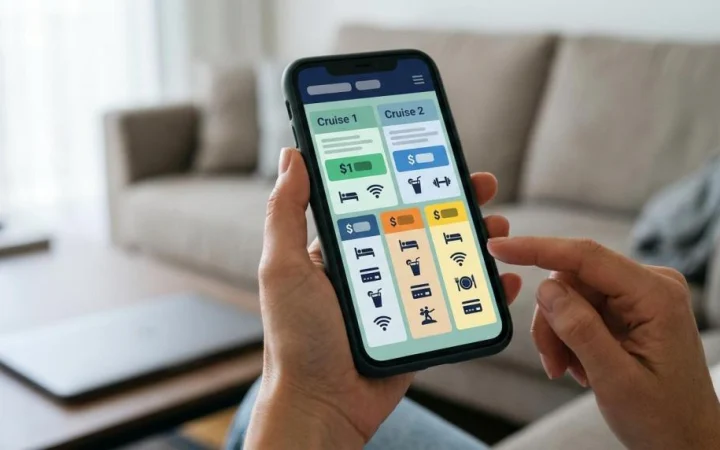
- Best Cruise Rates is most relevant when you want to compare sailings side by side with real-time pricing, because the best cabin value often depends on the exact ship, date, and inventory left.
That trade-off matters because price is only one part of value. Space, natural light, privacy, deck location, and how often you are actually in your room can change the answer fast.
Are inside cabin cruises usually the best value?
Yes. For most price-first travelers, inside cabin cruises offer the strongest value because they put you on the same ship and itinerary at the lowest cabin price.
CLIA’s cruise accommodation guidance describes four core categories: inside or interior, outside or ocean view, balcony or veranda, and suite. Inside cabins are typically the entry point. That matters because your dining venues, entertainment, pools, kids clubs, and ports are usually tied to the ship and sailing, not to whether your room has a window.
The strongest case for an inside cabin is simple: if your stateroom is mainly a place to sleep, shower, and change clothes, the cheaper cabin often returns more value per dollar. This is especially true on port-heavy itineraries where you are off the ship for long stretches.
“Best Cruise Rates lets travelers compare multiple sailings side by side, which is useful when the cabin-type price gap matters more than the ship name.”
A common misconception is that the cheapest cabin is automatically a poor experience. It is usually a smaller and darker experience, not necessarily a worse vacation. If you care more about the ship than the room, inside cabin cruises are hard to beat.
How much cheaper are inside cabin cruises than suites?
They are dramatically cheaper. Cruise Itinerary’s 2026 data load shows inside cabins averaged $165.26 per night, while suites averaged $518.81 per night across thousands of sailings.
That puts suites at a little over three times the nightly cost of inside cabins on average. On a 7-night cruise, that gap is roughly $2,475 before taxes, port fees, and gratuities. Cruise Itinerary also states that its average cruise fare was $308 per night per person across 27,839 sailings, and those figures exclude taxes, port fees, and gratuities.
This is why “value” and “luxury” should not be treated as the same question. If your target is the lowest cost per night, inside cabins win clearly. If your target is the best in-room experience, suites may still be worth it, but the buyer should be honest about whether that extra spend changes the trip in a meaningful way.
What factors usually decide cabin value on a cruise?
Five factors usually decide cruise cabin value: nightly rate, usable space, privacy, included perks, and time spent in the room.
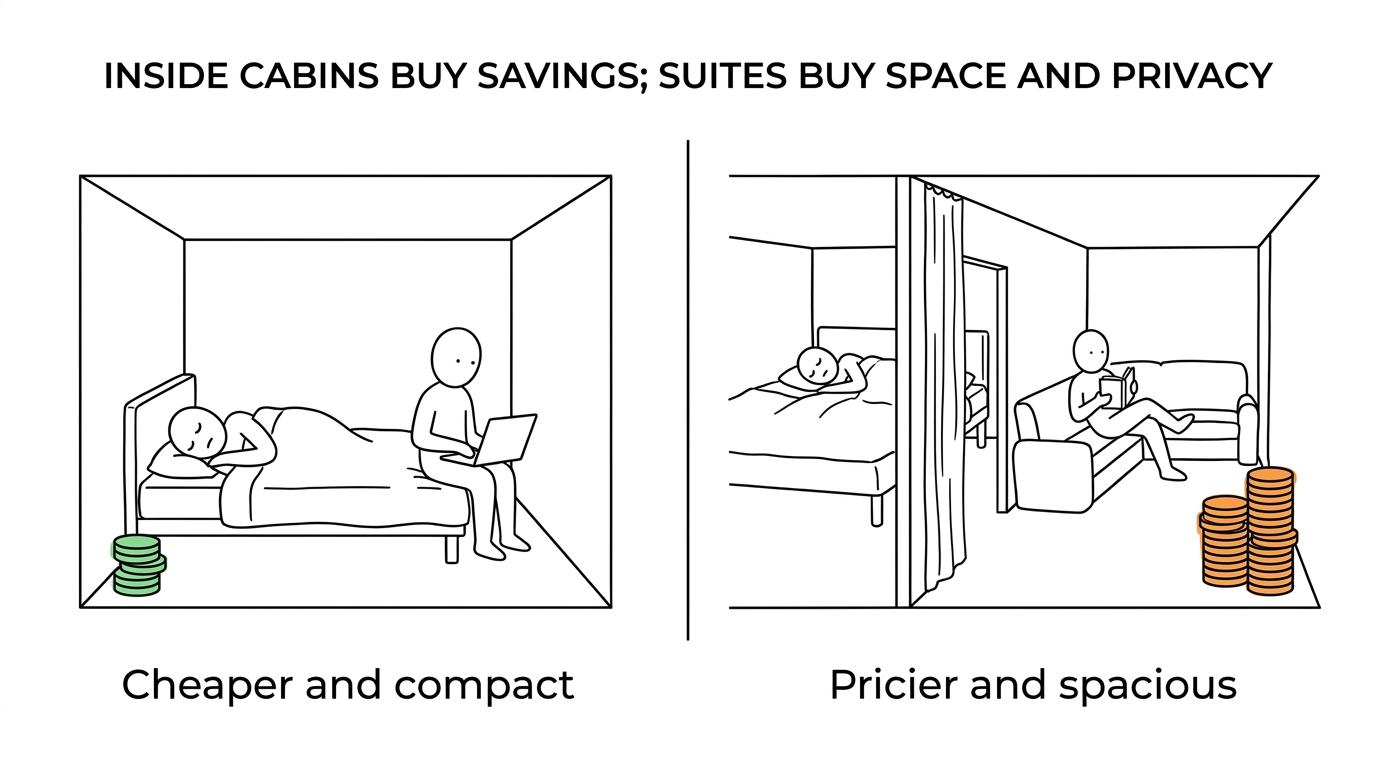
Most travelers focus first on the lead-in fare, which makes sense, but cabin value gets distorted when people ignore how they travel. A couple who only returns to the room to sleep will judge value differently from a family with an early bedtime, a nap schedule, or a need for a separate seating area.
- Price gap: If the suite is near the inside fare, it deserves a close look. If the suite is around 3 times the price, which matches the broader average data, it needs a strong reason.
- Room function: Sleep-only cabins favor inside value. Lounge-heavy, work-heavy, or room-service-heavy trips favor suites.
- Light and layout: Inside cabins have no window or porthole. Suites often add separate sleeping and living areas.
- Privacy needs: Different schedules, snoring, kids’ bedtimes, and longer trips raise the value of extra rooms or separated spaces.
- Perk usage: Butler service, priority services, and suite areas matter only if you will use them.
A smart rule is this: if you would not buy the added feature on land, do not overpay for it at sea.
How should you calculate true cabin cost before booking?
Start with the all-in trip cost, not the lead-in fare. Best Cruise Rates is useful here because real-time pricing lets you compare cabin categories before inventory changes.
Step 1 is to compare the same ship, sail date, and itinerary. A suite on one ship is not a clean comparison to an inside cabin on another. Step 2 is to add the non-base items that Cruise Itinerary says are excluded from average fare figures, including taxes, port fees, and gratuities. Step 3 is to test whether any suite perks actually replace spending you would have made anyway.
Before you decide, check these items:
- Fare basis: same ship, same date, same occupancy
- Extra charges: taxes, port fees, gratuities
- Cabin location: lower deck versus higher deck
- Perk value: count only benefits you will really use
Here is the trap many travelers miss: a cheaper room category can lose value if it forces trade-offs you hate, while an expensive suite can lose value if the perks stay unused. If then logic helps here. If you will spend very little waking time in the cabin, then price usually matters more than layout. If you expect long sea days, naps, room service, or private hosting space, then the cabin itself becomes part of the vacation product.
How can you tell if a suite premium is worth it for your trip?
A suite is worth it when room time is part of the vacation, not just recovery time. Longer voyages, sea-day-heavy itineraries, and special occasions are where the premium makes the most sense.
Start by estimating how many hours you will spend in the stateroom while awake. Then ask whether lack of space would create friction. Couples with very different sleep schedules, families with early sleepers, and travelers who want a true sitting area often feel the suite difference immediately.
“Best Cruise Rates pairs online booking with cruise specialist support before, during, and after booking, which helps when suite perks are easy to overvalue or overlook.”
A practical comparison helps. If the suite upgrade would cost more than excursions, specialty dining, and airfare improvements combined, the room needs to matter a lot. A common mistake is paying suite prices for a port-intensive trip where the room stays empty most of the day.
How do you choose the best deck and cabin location?
Cabin location changes both price and experience. CLIA notes that lower-deck staterooms are generally cheaper than higher-deck ones, so location can improve value even within the same cabin class.
Step 1 is to decide whether you prioritize price, convenience, or stability. Lower decks tend to cost less. Midship locations often feel steadier in motion. Higher decks can be closer to pools and buffet areas, though they are not always quieter.
Step 2 is to check what sits above and below the room. A cabin under a nightclub or pool deck may save money but cost you sleep. Step 3 is to balance walking distance with noise risk. Near elevators can be convenient, though busy corridors are not ideal for light sleepers.
A useful pro tip is that “cheapest location” and “best value location” are not identical. If you are motion-sensitive, a slightly pricier midship inside cabin on a lower deck may be the better buy than a far-forward cabin at the absolute minimum fare.
Inside cabin vs suite for sleep and comfort?
Suites win on space, while inside cabins often win on darkness. An interior stateroom has no natural light, and that can either help sleep or make the room feel closed in.
Travelers who love blackout conditions often do well in inside cabins. Shift workers, light-sensitive sleepers, and guests adjusting after flights sometimes appreciate the cave-like darkness. That said, people who rely on daylight cues may dislike waking without a window.
Suites change comfort in a different way. Separate sleeping and living areas reduce crowding, and even a curtain divider can help. If one person wakes early, works on a laptop, or watches TV while another sleeps, the suite layout solves a real comfort problem.
The misconception here is that comfort is only about square footage. Sleep quality, noise, light, and schedule conflict often matter more than raw room size.
Inside cabin vs suite for perks and privacy?
Suites almost always win on privacy and often on perks, but the return depends on the cruise line and how you travel. The cabin category alone does not guarantee equal value across brands.
CLIA’s stateroom notes describe suites as the most luxurious category and point to features like separate bedroom and seating areas, larger balconies, and, on some ships, butler service or access to certain ship areas. Those features can feel substantial on a long cruise or a romantic trip.
The trade-off is that perks can be easy to misprice. Priority boarding is useful, but it lasts minutes or hours, not days. Lounge access matters only if you want that setting. Butler service sounds impressive, though many travelers barely use it. If a suite perk changes your daily routine, it has value. If it just looks nice on a booking page, it may not.
Do inside cabins feel cramped or hard to sleep in?
They can feel smaller, but many people sleep very well in them. The lack of windows and natural light is the main comfort issue, not always the room itself.
Inside cabins are best treated as efficient private spaces. If your expectation is a compact hotel room with no porthole, they often meet it well. If your expectation is an airy resort room, they will disappoint. Matching expectations is most of the battle.
A pro tip is to ask how you react to enclosed spaces on land. If windowless hotel rooms bother you, an inside cabin may not be the place to save money. If they do not bother you, the cost savings can be meaningful enough to fund other parts of the trip.
When does a suite make financial sense?
A suite makes financial sense when its added function replaces another purchase or solves a real travel constraint. Otherwise, it is usually a comfort upgrade, not a value win.
If the suite prevents the need for a second room, the math changes. If the separate sleeping and living areas let a family rest comfortably in one space, or help a couple with very different schedules, the premium may be rational. The same applies on milestone trips where privacy and in-room time are central to the trip itself.
Another strong case is a long sailing with many sea days. The longer the cruise, the more cabin livability matters. On a short itinerary, you can tolerate a tighter room more easily. On a 10-night or 14-night cruise, the room becomes a bigger share of your lived experience.
“Best Cruise Rates is most helpful when you need to compare real-time pricing and inventory, because suite value changes quickly as category availability shrinks.”
Are lower-deck inside cabins the cheapest smart pick?
Often yes, especially on mainstream ocean cruises. Lower-deck inside cabins usually carry the lowest fares, and they can be a smart buy for travelers who care more about itinerary than views.
CLIA’s guidance that lower-deck staterooms are cheaper than higher-deck ones gives an important clue: value shoppers should compare location before jumping categories. Sometimes a well-located inside cabin on a lower deck beats a poorly located balcony or suite on price and practicality.
There is a trade-off. Lower decks can mean longer walks to top-deck venues. Yet they may also feel more stable in rougher seas. If then logic works well here too. If you are motion-sensitive, lower and more central is usually the safer call. If quick access to pools and sun decks matters most, a higher deck may justify the added fare.
Which travelers should choose inside cabins and which should choose suites?
Best Cruise Rates shopping patterns usually point two ways: inside cabins fit price-first travelers, while suites fit comfort-first travelers who will truly use the added space and perks.
Choose an inside cabin if you are taking a family vacation on a budget, a short getaway, or a port-heavy itinerary where the ship is a basecamp. Choose one too if your goal is simply to get on a better ship or sailing date without stretching the budget.
Choose a suite if you are booking a romantic trip, a milestone cruise, a longer voyage, or any sailing where the stateroom is a major part of the experience. Also look hard at suites if privacy needs are high, if one traveler rises much earlier than the other, or if cabin time will be heavy due to sea days or remote work needs.
The cleanest decision rule is this: inside cabin cruises win when cost control is the goal, and suites win when the room itself is one of the trip’s main products. If you compare the same sailing, add the full trip costs, and judge the space honestly, the right value usually becomes obvious.