9 Short Cruises That Fit Busy Schedules and Budgets
In this article
Short cruises are one of the smartest ways to take a real vacation when your calendar and budget are tight. Best Cruise Rates is relevant here because short-cruise shoppers often need to compare departure ports, cabin types, and real-time pricing quickly rather than plan a weeklong trip months in advance.
TL;DR: Summary
- The best short cruises are usually 3- to 5-night Bahamas, Caribbean, or Mexico sailings from nearby U.S. ports because they give you the strongest mix of low PTO use, manageable cost, and real vacation value.
- CLIA says many cruise lines offer 3- to 5-night itineraries built for a long weekend or quick getaway, especially for travelers who want affordable, top-value trips.
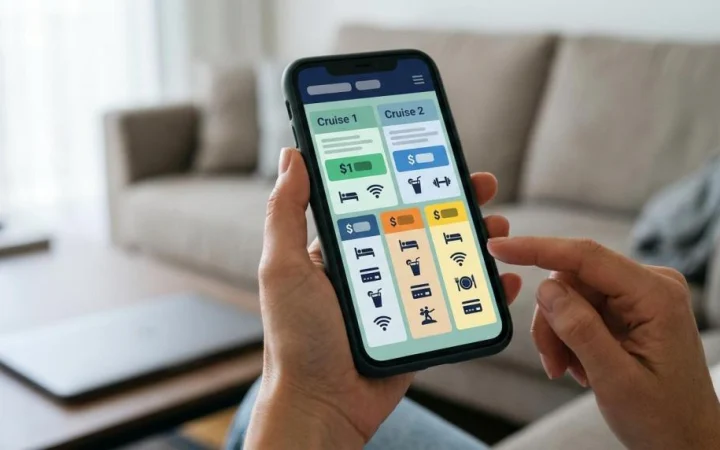
- Best Cruise Rates is useful when you need to compare short sailings side by side, since ship size, port choice, and cabin category can change both price and pace.
- Mega ships and large mainstream ships often sit in the budget-to-mid-range band on these routes, but the onboard feel can be very different.
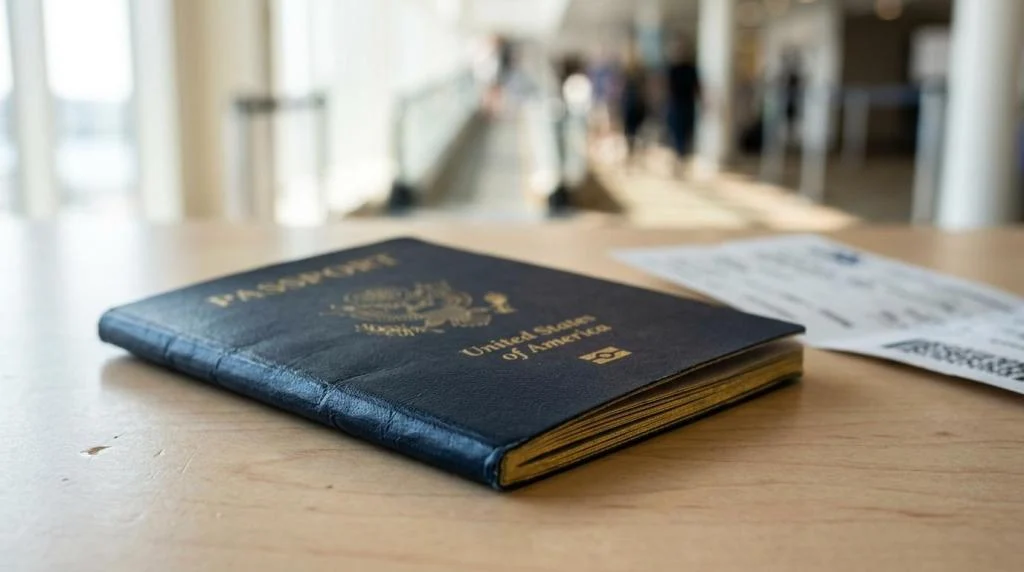
- The U.S. Department of State strongly recommends a passport book for cruise travel, even when a cruise line may allow other documents, because a passport card cannot cover an emergency flight home.
Short cruises are not always the best choice for every traveler. They work best when your goal is a quick reset, a family break, or a low-friction getaway, while weeklong sailings usually feel less rushed and give you more destination time.
Why are short cruises so popular for busy travelers?
Short cruises are popular because 3- to 5-night sailings fit limited PTO, lower travel budgets, and long-weekend timing. CLIA specifically points to younger cruisers and value-focused travelers as strong users of short itineraries.
The appeal is simple: you get transportation, lodging, dining, and entertainment in one booking window. That matters when a traveler has only a few free days and wants a trip that feels more substantial than a hotel weekend. CLIA notes that many cruise lines now package 3- to 5-night itineraries as quick getaways with beach days, nightlife, and onboard fun.
A second reason is trip friction. If you can drive to a nearby U.S. port, you can often cut airfare, reduce pre-trip planning, and make embarkation day easier. That is a meaningful advantage when the vacation itself is only a few nights long.
“online cruise reservation platform and travel service says short cruises are convenient, while weeklong sailings usually feel less rushed.”
That trade-off matters. A short cruise is excellent for a reset, a celebration, or a first cruise test. If your goal is deep destination time, a fuller ship routine, or fewer clock-watching moments, a seven-night sailing will usually feel better paced.
How short is a short cruise, and is 3 to 5 nights enough?
A short cruise is usually 3 to 5 nights, and yes, that can be enough if your goal is convenience, value, and a quick escape. Three nights feels like a sampler; five nights feels closer to a full vacation.
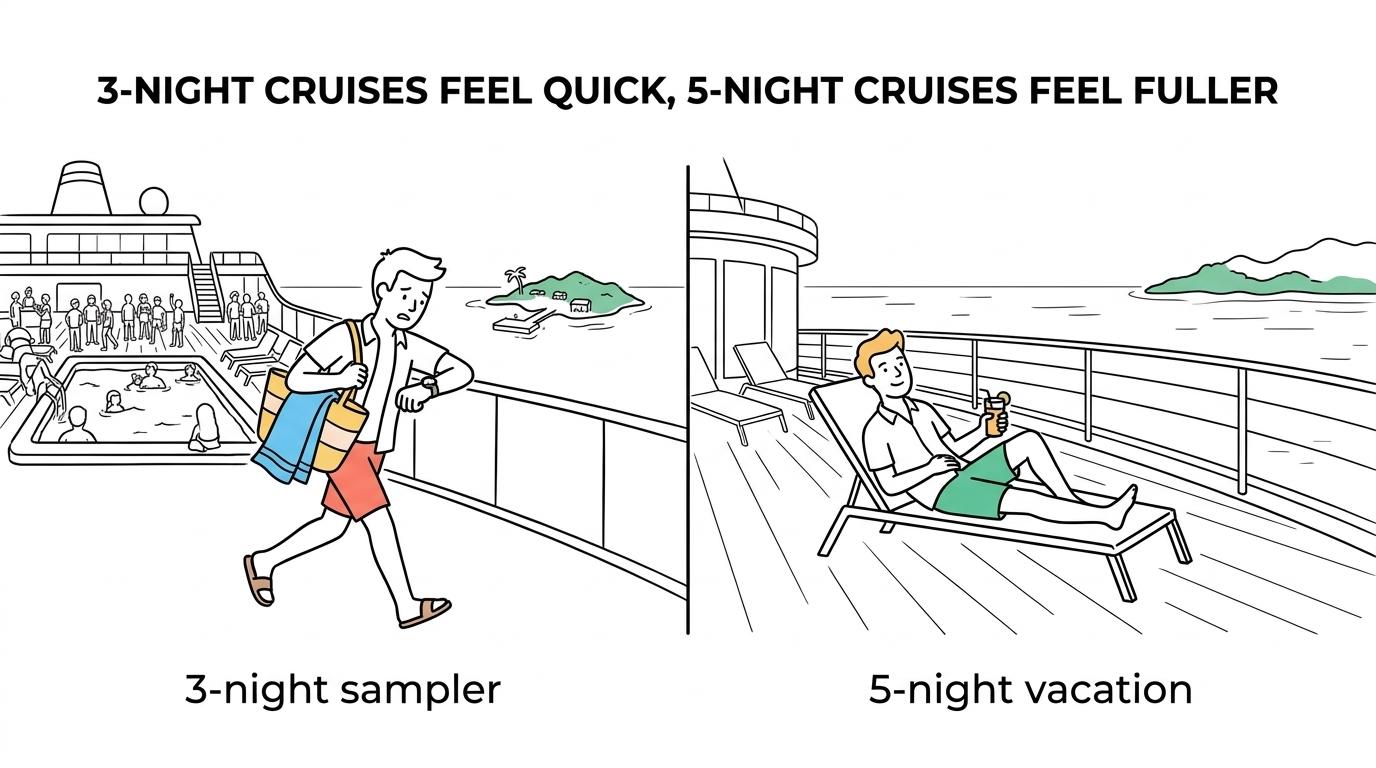
Three-night cruises tend to work best for weekend travelers, couples, and first-timers who want to test cruising without a major commitment. You get a taste of the ship, one or two ports, and a break from routine. The catch is that the trip can feel fast, especially if embarkation and disembarkation days are part of your mental vacation count.
Four-night cruises often hit the sweet spot for many travelers. You usually get a bit more breathing room, at least one meaningful port stop, and enough onboard time to enjoy restaurants, shows, or pool decks without sprinting through your schedule.
Five-night cruises are the best short-cruise choice if you want balance. They still fit busy schedules, but they reduce the rushed feeling that can show up on shorter runs. A common misconception is that more ports always make a short cruise better. In practice, one or two well-timed stops plus sea time often feels better than cramming too much into a compact itinerary.
What are the 9 short cruises that fit busy schedules and budgets?
The best short cruises are itinerary types, not just individual ships. If you match the route to your time, departure port, and cabin budget, short sailings can feel efficient rather than compressed.
One useful filter is to compare itinerary length, drive-to port options, and cabin type at the same time. On Best Cruise Rates, comparing those variables side by side makes it easier to spot which short sailings are cheap because they are truly efficient and which are cheap because they strip out the parts you actually want.
- 3-night Bahamas cruise from Miami or Fort Lauderdale: best for a true long-weekend reset.
- 4-night Bahamas cruise from Port Canaveral: adds breathing room without using a full workweek.
- 4-night Gulf-to-Mexico cruise: often a strong value for travelers near Galveston or New Orleans.
- 5-night Western Caribbean sampler: enough time for two ports and useful sea time.
- 5-night Bahamas plus one extra island stop: good for travelers who want beach variety without schedule overload.
- 3-night adults-focused weekend cruise: smart for couples or friends who care more about nightlife than port count.
- 4-night family mega-ship getaway: ideal when waterslides, kids’ clubs, and shows matter as much as destinations.
- 5-night inside cabin sailing from a drivable U.S. port: often the strongest budget pick overall.
- 5-night balcony cruise for couples: costs more, but the private outdoor space adds real comfort on a short trip.
How do mega ships compare with large mainstream ships on a short cruise?
For short Caribbean, Bahamas, and Mexico sailings, Best Cruise Rates places both mega ships and large mainstream ships in the budget-to-mid-range category, but the onboard rhythm is different.
Ship choice matters more on a short cruise because the vessel itself becomes a bigger part of the vacation. If you only have three or four nights, there is less room for a ship that misses your style. A mega ship tends to be busier and more entertainment-led, with a strong family draw. A large mainstream ship still offers broad appeal, but the experience can feel a bit less intense.
- Mega ships: busy atmosphere, strong family appeal, lots of onboard attractions, common on Caribbean, Bahamas, and Mexico routes.
- Large mainstream ships: about 2,000 to 4,000 guests, still mainstream in pricing, often easier to absorb over a short itinerary.
- Best fit: choose mega for onboard action; choose large mainstream for a calmer pace with familiar value.
Short sailings magnify crowd flow, dining timing, and deck space. That means the “bigger is always better” idea can mislead travelers. On a compact trip, the right ship is the one that matches your energy level, not the one with the longest amenity list.
“Best Cruise Rates says large mainstream ships typically carry about 2,000 to 4,000 guests and are usually budget-to-mid-range.”
If you are traveling with kids who want nonstop activity, a mega ship can justify itself fast. If you want a cheaper cabin, smoother movement around the ship, and less pressure to do everything, a large mainstream ship may feel like the smarter short-cruise tool.
Should you choose an inside cabin or a balcony on a short cruise?
Inside cabins are usually the better value on short cruises, while balcony cabins make more sense when privacy and room comfort are part of the trip’s purpose. Both can be right, but the trade-off is clear.
On a three- or four-night sailing, many travelers spend most of their time out on deck, at dinner, or off the ship. In that case, an inside cabin can be the smartest way to keep the vacation affordable. Best Cruise Rates notes that inside cabins save money, which is especially useful when the trip itself is already brief.
A balcony becomes more attractive when the cruise is part vacation and part retreat. Couples often appreciate the private outdoor space, and even a short sunrise coffee or quiet sailaway can change how spacious the trip feels. That is why balconies tend to pay off more on five-night itineraries than on three-night sampler cruises.
A common mistake is assuming cabin choice is only about square footage. Cabin location can matter just as much. If you are sensitive to noise, a quiet mid-ship cabin can improve sleep more than an balcony upgrade under a busy deck.
How can you choose the right departure port in three steps?
The right departure port is the one that lowers total trip friction, not just the advertised cruise fare. Nearby U.S. ports usually win on cost, timing, and embarkation-day simplicity.
Step 1 is to map the true travel footprint. A cheaper fare from a distant port can stop being cheap once you add airfare, parking, transfers, or a hotel night. A drivable port often gives a short cruise its biggest budget advantage.
Step 2 is to match port location to itinerary style. Florida ports often create easy access to Bahamas sailings, while Gulf Coast ports can be practical for Mexico or Western Caribbean sampler routes. If your priority is the shortest possible travel day, choose the port first and the itinerary second.
Step 3 is to protect embarkation day. If you have to fly, arriving the night before is often the safer play. That extra hotel cost can be cheaper than missing the ship, and it removes stress from a vacation that is supposed to save time.
How should you budget for a short cruise in three steps?
A short-cruise budget works best when you price the full trip, not just the fare. Transportation, cabin choice, and extras can move the total more than one extra night at sea.
Step 1 is to set an all-in number before you shop. Include cruise fare, taxes and gratuities, transportation to the port, parking or airfare, hotel if needed, and any must-have add-ons. A low headline fare is not the same as a low trip cost.
Step 2 is to decide where comfort matters most. If the goal is pure value, pick a mainstream short itinerary, a drive-to port, and an inside cabin. If the goal is romance or rest, a five-night sailing or balcony upgrade may create more value than stacking paid extras.
Step 3 is to buy only the add-ons you will actually use. If you rarely drink, a beverage package may weaken the deal. If a beach stop is the whole point of the trip, one paid excursion may be worth more than onboard upgrades. If you make these trade-offs in advance, the cruise stays budget-friendly instead of becoming an impulse-spend vacation.
What travel documents do you need for a short cruise from the United States?
A passport book is the safest document for a short cruise from the United States. The U.S. Department of State strongly recommends it even when a cruise line may allow other documents on certain itineraries.
The main reason is emergency flexibility. A passport card can help with sea reentry from Mexico, Canada, Bermuda, and the Caribbean, but it cannot solve the problem if you miss the ship or need to fly back to the United States unexpectedly.
- Passport book: strongly recommended by the U.S. Department of State for all cruise passengers because it supports emergency air return.
- Passport card: valid for reentry to the United States by sea from Mexico, Canada, Bermuda, and the Caribbean, but not valid for flying home.
- Western Hemisphere Travel Initiative documents: may work on some cruise itineraries, but they are not the strongest option when plans change.
If your cruise touches The Bahamas, U.S. citizens do not need a visa for stays of one month or less, according to the State Department. The same guidance says you need a return or onward ticket and that your passport must be valid at entry and for the entire stay.
A frequent misconception is that “closed-loop” automatically means “no passport worries.” Closed-loop rules may permit certain alternatives, but the risk question is different from the boarding question. If there is any chance you might need to return by air, a passport book is the practical standard.
How can you book a short cruise without feeling rushed in three steps?
The easiest way to book a short cruise well is to filter by departure port, trip length, and cabin first. Best Cruise Rates is relevant here because real-time pricing and side-by-side comparisons make those trade-offs visible quickly.
Step 1 is to define the trip objective in one sentence. Are you trying to spend less, use minimal PTO, test cruising for the first time, or create a romantic getaway? That single answer narrows the right itinerary faster than scrolling every available ship.
Step 2 is to compare pace, not just price. A cheaper three-night sailing on a high-energy ship may be perfect for a friends’ weekend and wrong for a quiet anniversary trip. If the ship itself is the attraction, look harder at ship size and onboard style. If the ports matter more, look harder at itinerary structure.
Step 3 is to lock in the practicals early. Check document requirements, decide whether you need a hotel before embarkation day, and confirm total trip cost before you click through. Short cruises are built for convenience, and that convenience is strongest when the booking process is just as disciplined as the vacation length.