Do You Need a Passport for a Cruise? Rules by Itinerary
Do you need a passport for a cruise? Closed-loop sailings from US ports often allow a birth certificate plus ID, but here is when a passport is required.
In this article
Short answer: for most cruises that start and end at the same U.S. port, a U.S. citizen can legally sail with a government-issued photo ID plus a certified birth certificate, no passport required. For every other kind of cruise, and for anyone who wants protection against a missed ship or a medical emergency abroad, a valid passport book is either required outright or strongly advisable.
That is the whole rule in two sentences, but the details matter, because the exception that applies to you depends on where your cruise begins, where it ends, which countries it touches, and sometimes which cruise line is operating it. A Western Caribbean sailing round-trip from Miami and a one-way Panama Canal crossing from Fort Lauderdale to San Diego look similar on a brochure page. One lets you board with a birth certificate. The other does not.
Below is the full breakdown by itinerary type, what the U.S. Customs and Border Protection rules actually say, where cruise lines add their own stricter requirements, and the specific scenarios where traveling without a passport can cost you thousands of dollars.
What is the actual legal rule for cruises from U.S. ports?
Video: "Do you need a passport for a cruise?" — Royal Caribbean Blog (YouTube)

Photo: Port of San Diego · BY
The governing framework is the Western Hemisphere Travel Initiative (WHTI), administered by U.S. Customs and Border Protection. Under WHTI, U.S. citizens arriving by sea from countries in the Western Hemisphere generally need a passport book, passport card, Trusted Traveler card (NEXUS, SENTRI, Global Entry card), or an Enhanced Driver's License.
The carve-out that makes passport-free cruising possible is the closed-loop exception. CBP states that U.S. citizens on closed-loop cruises, meaning voyages that begin and end at the same port in the United States, may enter or depart the country with a government-issued photo ID and proof of citizenship such as a certified birth certificate. You can read CBP's own description of sea travel document requirements at cbp.gov.
A few points that people routinely get wrong:
- The exception covers entering the United States. It does not obligate any foreign country to admit you without a passport. In practice, the Caribbean, Mexico, Canada and Bermuda work with cruise ship manifests and accept the arrangement, but the legal footing is different from "a birth certificate is a valid travel document worldwide."
- The exception applies to U.S. citizens. Lawful permanent residents, dual nationals and foreign nationals follow different rules, covered further down.
- Cruise lines are allowed to be stricter than the federal minimum, and some itineraries are.
So the honest framing is: closed-loop cruising without a passport is legal and common, and it is also the version of cruising with the least margin for error.
What exactly counts as a "closed-loop" cruise?
A closed-loop cruise departs from a U.S. port and returns to that same U.S. port. Miami to Miami. Galveston to Galveston. Seattle to Seattle. Port Canaveral to Port Canaveral.
Here is where travelers trip up:
Different ports in the same state do not count. A sailing from Fort Lauderdale that ends in Miami is not closed-loop, even though the two terminals are only about 30 miles apart. It is an open-jaw, or open-loop, itinerary and standard WHTI document rules apply.
Different ports in the same metro area do not count either. Brooklyn to Manhattan is not closed-loop.
Flying home from a foreign port breaks the loop for you personally. If the ship returns to Tampa but you disembark early in Cozumel because of a family emergency, you now need to fly back into the United States, and air travel requires a passport. The ship's loop is irrelevant at that point. This is the single most common way passport-free cruisers get stuck.
A quick test: look at your booking confirmation. If the "embarkation port" and "disembarkation port" fields contain the identical port name, it is closed-loop. If they differ at all, assume you need a passport.
Which cruise itineraries require a passport, no exceptions?
The list below covers the common cases where a U.S. citizen must present a valid passport book.
| Itinerary type | Example | Passport required? |
|---|---|---|
| Closed-loop Caribbean | Miami to Miami, 7 nights | No, ID + birth certificate accepted |
| Closed-loop Mexican Riviera | Los Angeles to Los Angeles | No, ID + birth certificate accepted |
| Closed-loop Bahamas | Port Canaveral to Port Canaveral | No, ID + birth certificate accepted |
| Closed-loop Alaska via Canada | Seattle to Seattle | No, ID + birth certificate accepted |
| One-way Alaska | Vancouver to Seward | Yes |
| Transatlantic / repositioning | Barcelona to Miami | Yes |
| Panama Canal full transit | Fort Lauderdale to San Diego | Yes |
| Any Europe, Asia, Africa, Australia sailing | Rome to Rome | Yes |
| Any cruise with a flight to or from a foreign port | Fly to San Juan, sail to Barbados | Yes |
| Cruises touching countries outside the Western Hemisphere | Greenland and Iceland segments | Yes |
| South America, including Brazil and Argentina ports | Buenos Aires to Santiago | Yes, plus possible visas |
A couple of these deserve their own explanation.
One-way Alaska cruises
Alaska is the classic trap. A round-trip Seattle sailing is closed-loop, so birth certificate plus photo ID works, even though the ship calls in Victoria or Vancouver. But the popular one-way itineraries, Vancouver to Seward or Whittier to Vancouver, cross an international border in one direction only, and you will either fly into Canada or fly out of it. Passport required, and that includes children.
Panama Canal transits
A partial transit that enters the canal, visits Gatun Lake, and returns to the Caribbean side, finishing at the same U.S. port it started from, can qualify as closed-loop. A full transit from Florida to the Pacific coast ends in a different port and sometimes a different country. If you are weighing those two formats, the differences go well beyond paperwork, and we broke them down in Panama Canal Cruise in Winter: Full vs Partial Transit.
Repositioning cruises
Repositioning sailings are not closed-loop by definition. The entire point is moving a ship from one region to another, so they start in Europe and end in Florida, or start in Vancouver and end in Hawaii. They are frequently the best per-night value in cruising, and the trade-off is that everybody aboard needs a passport and a one-way flight. See Repositioning Cruises: Why They're Cheaper Per Day for how the pricing works.
What documents do I need if I sail closed-loop without a passport?
You need two items, and both have to meet specific standards.
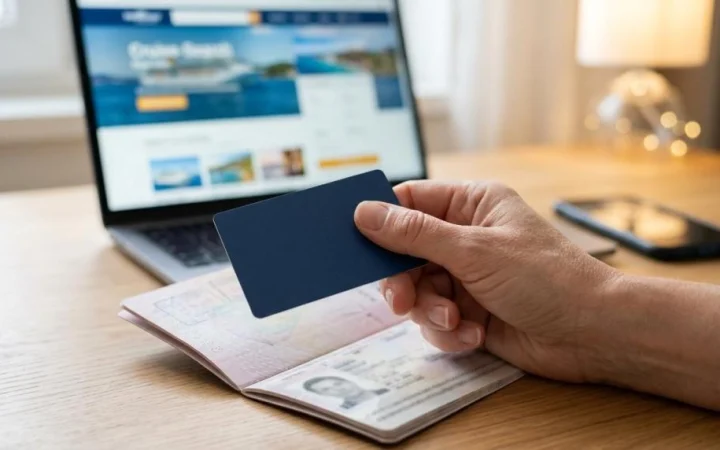
1. Proof of U.S. citizenship. Accepted forms generally include:
- An original or certified copy of a birth certificate issued by a city, county, or state vital records office, with a raised seal, stamp, or other official marking
- A Certificate of Naturalization or Certificate of Citizenship
- A Consular Report of Birth Abroad
Hospital-issued "souvenir" birth certificates with footprints are not accepted. Photocopies are not accepted. Laminated certificates are sometimes rejected, because lamination can hide security features. If your copy is 40 years old, faded, or laminated, order a fresh certified copy from the issuing state's vital records office well before sailing. Turnaround varies by state and can run from days to several weeks.
2. Government-issued photo ID. For adults 16 and over, this is typically a valid driver's license or state ID card. The ID must be unexpired.
Children under 16 traveling on a closed-loop cruise generally need only proof of citizenship, no photo ID. Policies vary slightly by line, so confirm with your booking.
Name mismatches are the quiet killer. If your birth certificate says Sarah Michelle Johnson and your driver's license says Sarah Reed, you need the connecting documents: marriage certificate, divorce decree, or court-ordered name change. Bring originals or certified copies. The cruise line cannot verify your identity chain on a photo of a document in a group text.
Does a passport card work instead of a passport book?
Yes, for the right itineraries, and it is one of the better-kept value plays in cruise documentation.
The U.S. passport card is valid for land and sea entry into the United States from Canada, Mexico, the Caribbean, and Bermuda. It is not valid for international air travel. The State Department's passport card page explains the limits at travel.state.gov.
What that means in practice:
- Good for: Closed-loop and even some open-loop cruises within those regions, plus every Caribbean, Mexico, Bahamas and Bermuda port call. It is a far stronger document than a birth certificate because it is a federally issued, photo-bearing proof of citizenship.
- Not good for: Flying home from a foreign port. If you miss the ship in Cozumel, a passport card will not get you on a plane to Houston. You would be dealing with the nearest U.S. embassy or consulate for an emergency travel document.
The card costs meaningfully less than the book. As of the State Department's published fee schedule, an adult first-time passport card runs a fraction of the book price, and if you apply for both at the same time you only pay the execution fee once. Check current fees directly at travel.state.gov before budgeting, since fees change.
Our practical read: if you cruise regularly in the Caribbean and never fly internationally, the card is a reasonable minimum. If there is any chance you will fly abroad in the next decade, buy the book. Many families apply for both together.
What about the Enhanced Driver's License?
An Enhanced Driver's License (EDL) is a state-issued license that also serves as proof of citizenship for land and sea border crossings. It works much like the passport card for cruise purposes.
The catch: only a handful of states issue them. As of CBP's published list, the issuing states are Michigan, Minnesota, New York, Vermont, and Washington. If you live anywhere else, this is not an option.
Like the passport card, an EDL does not work for international air travel. The same missed-ship problem applies.
What happens if I miss the ship and I do not have a passport?
This is the scenario that converts "a passport is optional" into "a passport would have been far cheaper than this."
Ships depart on schedule. If you are not aboard at all-aboard time, usually 30 to 60 minutes before sailing, the ship leaves. Your luggage, your medication and your passport-substitute documents may leave with it, since the birth certificate you handed over at check-in is usually returned to you, but your belongings are in the cabin.
Now you are a U.S. citizen in a foreign country with no passport and no valid way to fly home. The sequence looks like this:
- Contact the nearest U.S. embassy or consulate. Many Caribbean destinations have one, but not all, and they keep business hours. A Sunday missed sailing in a small port can mean waiting until Monday.
- Apply for an emergency passport. This generally requires proving your identity and citizenship, filling out forms, paying the standard passport fee, and providing a photo. Emergency passports are usually issued with limited validity.
- Book a new flight home, often last-minute, often at last-minute prices.
- Pay for lodging and meals while you wait.
Realistically you are looking at several hundred dollars at the absolute low end and well over a thousand if you need multiple nights and a peak-season one-way flight for a family. Travel insurance may reimburse some of it, but only if your policy includes missed-connection or trip-interruption coverage and the reason for missing the ship is a covered peril. "We lost track of time at the beach bar" is not a covered peril.
Compare that to the cost of a passport book, which is valid for 10 years for adults. Spread across a decade, that is a trivially small insurance premium against the above.
The medical version of the same problem
If you have a serious medical event aboard and the ship disembarks you at a foreign port for hospital care, you will eventually need to fly home. Same problem, worse timing. Insurance and medical evacuation providers can handle a great deal, but they cannot conjure a passport.
Do children need a passport for a cruise?
For closed-loop cruises, U.S. citizen children under 16 generally need only a certified birth certificate. No photo ID is required for them, and no passport is required.
Three complications worth planning around:
Minors traveling without both parents. Cruise lines and border officials may ask for a notarized letter of consent from the non-traveling parent or legal guardian. This is not a universal federal requirement for closed-loop sailings, but it is commonly requested, and refusal at the pier is not the moment to argue about it. CBP recommends the letter for children traveling with one parent or with other adults. Carry it. A single page, notarized, with contact details for the absent parent, usually settles the question on the spot.
Grandparents taking the grandkids. Same documentation. Notarized consent from the parents, plus the child's birth certificate showing the parents' names.
Children who turn 16 between booking and sailing. Once they hit 16, the photo ID requirement kicks in. A school ID is often not sufficient. Plan for a state ID card.
For families, there is a separate reason to get children passports anyway: child passports are valid for only five years, and renewal always requires an in-person application. Getting one at age 3 and another at age 8 is annoying, but it makes every future school-break trip simpler. If you are booking a holiday-week family sailing like a Royal Caribbean 4th of July cruise, documentation errors at the pier are especially painful because the terminal is at peak volume and there is no flexibility in the schedule.
Do I need a passport for a Bahamas cruise?
For a closed-loop Bahamas cruise from Florida, no. A certified birth certificate plus photo ID satisfies the requirement for U.S. citizens.
This covers the very common short sailings: three- and four-night runs from Miami, Fort Lauderdale, Port Canaveral and Jacksonville to Nassau, Freeport and the cruise lines' private islands. It also covers two-night "cruise to nowhere" style sailings that call at a private island.
Two caveats:
- The Bahamas has its own entry rules, and they are set by the Bahamian government, not by CBP. Cruise passengers arriving and departing on the same vessel are handled through the ship's manifest, which is why the arrangement works. If you intended to stay in Nassau independently, different rules apply.
- Private islands are still foreign territory. Royal Caribbean's Perfect Day at CocoCay, Disney's Castaway Cay and Lookout Cay, Holland America's Half Moon Cay, MSC's Ocean Cay and Norwegian's Great Stirrup Cay are all in the Bahamas. Calling only at a private island does not make a cruise domestic.
Do I need a passport for an Alaska cruise?

Photo: NOAA's National Ocean Service · BY
It depends entirely on whether the sailing is round-trip or one-way.
Round-trip from Seattle or San Francisco: closed-loop, so birth certificate plus photo ID is sufficient for U.S. citizens. These itineraries almost always include a brief Canadian call, typically Victoria, British Columbia, because the Passenger Vessel Services Act requires foreign-flagged ships sailing between U.S. ports to touch a foreign port. That Canadian stop does not break the closed loop.
One-way between Vancouver and Seward or Whittier: passport required. You are either flying into Canada or flying out of Alaska after entering through Canada, and air travel to or from Canada requires a passport.
Round-trip from Vancouver: this begins and ends in Canada, not the United States, so the closed-loop U.S. exception does not apply at all. You need a passport to fly into Vancouver in the first place.
If an Alaska cruise is on your list and you do not yet have a passport, the round-trip Seattle itineraries are the path of least resistance. They also tend to be easier on airfare, since Seattle is served by far more domestic routes than Anchorage.
Do I need a passport for a Mexico or Western Caribbean cruise?
For closed-loop sailings from Galveston, New Orleans, Miami, Tampa, Los Angeles, San Diego or Long Beach, no passport is required for U.S. citizens. Birth certificate plus photo ID works for Cozumel, Costa Maya, Progreso, Ensenada, Cabo San Lucas, Puerto Vallarta, Roatán, Belize City and Grand Cayman.
The practical risk in the Western Caribbean is distance. Mexican and Central American ports are far enough from the United States that a missed ship is a real logistical problem, and tendering ports like Grand Cayman and Belize City add a layer of weather risk: if seas are rough, tenders may be delayed. Ships generally wait for passengers delayed on their own tenders, but shore excursions booked independently of the cruise line do not carry the same protection as line-operated tours.
If you are price-shopping these routes, the seasonal spread is substantial. Our cheapest month to cruise the Caribbean breakdown walks through which weeks tend to price lowest and why.
Do I need a passport for a Hawaii cruise?
For a round-trip Hawaii cruise operated by Norwegian Cruise Line's Pride of America, which is U.S.-flagged and sails entirely within the Hawaiian Islands, no passport is needed. It is domestic travel. A photo ID is sufficient for adults, same as a domestic flight.
For any other Hawaii cruise, assume a passport is required or strongly advised:
- Sailings from the West Coast to Hawaii on foreign-flagged ships almost always include a foreign port call, usually Ensenada, Mexico, or a stop in French Polynesia or Canada, because of the Passenger Vessel Services Act.
- Repositioning sailings that end in Vancouver or Sydney require a passport outright.
Do I need a passport for a cruise to Canada or New England?
Round-trip from Boston or New York calling at Halifax, Saint John and Quebec is closed-loop, so birth certificate plus photo ID meets the U.S. re-entry requirement.
But Canada is a special case worth flagging. Canada sets its own admission rules, and Canadian border authorities have discretion over who they admit. A prior criminal record, including a DUI, can result in being found inadmissible to Canada regardless of your documentation. That is not a passport issue, but it surfaces on exactly these itineraries, and it is better to research Canadian admissibility before booking than to discover it at the pier in Halifax.
One-way itineraries between a U.S. port and Montreal or Quebec City require a passport.
What if I am a green card holder or not a U.S. citizen?
The closed-loop exception is a U.S. citizen rule. Everyone else follows different requirements.
Lawful permanent residents (green card holders): You need your valid Permanent Resident Card (Form I-551) to re-enter the United States. You will typically also need your passport from your country of citizenship, because foreign ports of call will want it and some countries require a visa based on your nationality rather than your U.S. residency.
Foreign nationals visiting the United States: You need your passport, plus a valid U.S. visa or ESTA authorization under the Visa Waiver Program, as applicable. Note that an ESTA covers arrival by air or sea on approved carriers; confirm your specific cruise line is a signatory carrier. CBP's ESTA information is at esta.cbp.dhs.gov.
Dual citizens: U.S. law expects U.S. citizens to enter and depart the United States on a U.S. passport. Carrying both passports is normal and often necessary.
Important: some Caribbean and Central American countries require visas based on nationality even for cruise passengers who only go ashore for the day. This is nationality-specific, not itinerary-specific, and it is the single most common documentation problem for non-U.S.-citizen cruisers. Check with the cruise line's documentation team and, where needed, the relevant consulate.
How long does my passport need to be valid?
Here is the rule that catches experienced travelers: many countries require at least six months of validity remaining beyond your date of entry. Some require three months. Some require only validity through your stay.
For cruises, the operative deadline is usually six months past your disembarkation date, not your sailing date.
Cruise lines generally enforce the strictest requirement among all countries on the itinerary, and they enforce it at check-in. If your passport expires in four months and your itinerary includes a country with a six-month rule, you can be denied boarding. The cruise line is not being difficult; they are legally responsible for passengers they land in foreign ports, and they face fines if they deliver someone who gets refused entry.
Action item: open your passport right now and look at the expiration date. If it is inside 12 months, start the renewal process before you book anything international. The State Department publishes current processing times at travel.state.gov, and those times fluctuate significantly with demand. Routine service has, at various points in recent years, run anywhere from a few weeks to multiple months, and expedited service shortens but does not eliminate the wait.
If you have a trip inside 14 days and proof of international travel, the State Department offers in-person appointments at regional passport agencies, but these are limited and fill fast.
Do I need visas in addition to a passport?
For most cruises in the Caribbean, Mexico, Bahamas, Bermuda, Canada and Alaska, U.S. citizens do not need visas. The cruise line handles port clearance and you go ashore on the ship's manifest.
Visas become relevant on:
- Asia itineraries, where China, Vietnam, India and others may require advance visas, sometimes with group-visa arrangements through the cruise line
- Australia, which requires an ETA or visa for U.S. citizens
- Brazil and some South American ports, where requirements have changed multiple times in recent years
- Middle East itineraries. Rules differ by country and by whether you are embarking, disembarking, or just calling. If you are considering a Dubai cruise in winter, confirm current UAE and Oman requirements for your nationality well in advance, because embarkation rules differ from transit-passenger rules.
- Russia, where the long-standing St. Petersburg cruise exception no longer applies as it once did
The reliable source is the State Department's country information pages at travel.state.gov, plus the cruise line's own documentation page for your specific sailing. Do not rely on a forum post from three years ago; visa rules change.
Does the cruise line ever require a passport even when the law does not?
Yes, and this catches people.
Cruise lines publish their own documentation requirements, and they can be stricter than CBP's minimum. Common cases:
- Specific itineraries where a port of call's country requires passports from all arriving passengers regardless of vessel
- Charter sailings and some specialty voyages
- Lines that simply require passports as policy on certain brands or ships
Always read the documentation section of your booking confirmation and the cruise line's own travel documents page. Royal Caribbean, Carnival, Norwegian, Celebrity, Princess, Holland America, MSC, Virgin Voyages and Disney each publish these. If the line's page says passport required, that is binding regardless of what the federal minimum allows.
Disney in particular runs a mix of closed-loop Florida sailings and longer international itineraries on the same hulls across a season. When the Disney Believe begins Fort Lauderdale service, the Bahamas and Caribbean round-trips will follow closed-loop rules, but any repositioning or non-round-trip sailing on the same ship will not. Check the specific sailing, not the ship.
What is the practical recommendation?
Here is the decision tree in plain terms.
Get a passport book if:
- Your cruise is anything other than closed-loop
- Your cruise visits any country outside the Western Hemisphere
- You are flying to or from the embarkation or disembarkation port internationally
- You have any medical condition that could plausibly require disembarking mid-cruise
- You are traveling with young children, elderly parents, or anyone who might need to leave the ship early
- You expect to take more than one international trip in the next 10 years
A passport card or EDL is a reasonable minimum if:
- You only sail closed-loop in the Caribbean, Mexico, Bahamas or Bermuda
- You are confident you will never need to fly home from a foreign port
- You want federally issued photo proof of citizenship without the book price
Birth certificate plus photo ID is legally sufficient if:
- Your cruise is strictly closed-loop
- You are a U.S. citizen
- Your cruise line does not require more
- You accept the missed-ship and medical-emergency exposure
Most experienced cruisers land on the passport book, not because the rules force it but because the math is lopsided. One passport costs roughly what two shore excursions cost, lasts a decade, and removes an entire category of vacation-ending problems.
A short pre-cruise document checklist
Run this 60 days out, not 60 hours out.
- Check passport expiration. Six months past disembarkation, minimum. Renew now if it is close.
- Verify names match exactly. Booking name must match the travel document, including middle names where the document shows one. Fix discrepancies with the cruise line early; some lines charge name-change fees or cannot change names at all after a certain point.
- Order certified birth certificates if sailing without a passport. Allow several weeks.
- Gather name-change documents if applicable.
- Prepare notarized consent letters for minors not traveling with both parents.
- Check visa requirements for every country on the itinerary against your nationality.
- Make copies. Photograph every document, store in cloud storage and email a copy to yourself. If originals are lost, copies accelerate replacement enormously.
- Leave a copy with someone at home who can send it to you.
- Check the cruise line's documentation page for your exact sailing, not a similar one.
- Read your travel insurance policy for missed-connection and medical-evacuation coverage.
Frequently asked quick answers
Can I use a REAL ID driver's license instead of a passport?
No. REAL ID is about domestic air travel and federal facility access inside the United States. It is not proof of citizenship and does not replace a passport or birth certificate for international travel.
Can I board with a photo of my birth certificate on my phone?
No. You need the physical certified document.
Does a laminated birth certificate work?
Often yes, but it can be refused. Lamination obscures security features. Order an unlaminated certified copy if yours is sealed in plastic.
What if my passport is damaged?
A passport with water damage, torn pages, or a loose cover may be rejected. Replace it before you travel.
Do I need my passport ashore in port?
Usually no. Most cruise lines advise carrying your ship card and a photocopy of your passport, leaving the original in the cabin safe. Exceptions exist where local authorities require the original; the daily program will say so.
Can I renew a passport by mail?
Adults who have a passport issued within the last 15 years, in their current name or with documentation of a name change, and who were at least 16 when it was issued, can generally renew by mail using Form DS-82. Children under 16 always renew in person.
Will the cruise line tell me if I have the wrong documents?
They will tell you at check-in, which is far too late. Verification is your responsibility, and cruise contracts typically state that passengers denied boarding for documentation reasons are not entitled to refunds.
The bottom line
Do you need a passport for a cruise? If your ship leaves from and returns to the same U.S. port, and you are a U.S. citizen, legally no. A certified birth certificate and a valid photo ID will normally get you aboard, through Caribbean ports of call, and back into the country.
For everything else, including one-way Alaska, full Panama Canal transits, transatlantic repositioning, Europe, Asia, and any itinerary involving an international flight, a valid passport book is required.
And the gap between "legally required" and "genuinely advisable" is where experienced cruisers land on the side of the passport. The document costs a modest one-time fee that covers a decade. The alternative, in the relatively rare case where something goes wrong in a foreign port, costs considerably more and ruins a vacation you spent a year planning.
If you are still choosing between itineraries and want help matching a sailing to your documentation situation, timing and budget, request a free personalized quote from BestCruiseRates.com. We will tell you plainly which option on your shortlist needs what paperwork, before you put down a deposit.