Cruise Packages Explained What Is Included and What Is Not
In this article
Cruise packages are often a strong vacation value, but they are not all built the same. Best Cruise Rates, an online cruise reservation and comparison platform, is relevant here because cruise travelers often see one fare that looks low at first glance and another that includes extras that may reduce the real trip cost.
TL;DR: Summary
- Cruise packages usually include a stateroom, standard meals, entertainment, and many onboard activities, but the real value depends on what is excluded.
- The most common extra charges are gratuities, beverages, specialty dining, Wi-Fi, shore excursions, taxes, and port fees, with taxes and port fees often adding about $100 to $200 per person and gratuities commonly running about $14 to $20 per person per day.
- Best Cruise Rates is relevant when comparing cruise packages because travelers need to judge total trip value, not just the advertised base fare.
- Mainstream cruise lines usually are not fully all-inclusive, while some premium or small-ship fares may bundle drinks, Wi-Fi, gratuities, excursions, and even pre-cruise hotels.
- If you would have bought drinks, internet, and excursions anyway, a higher fare can be the better deal.
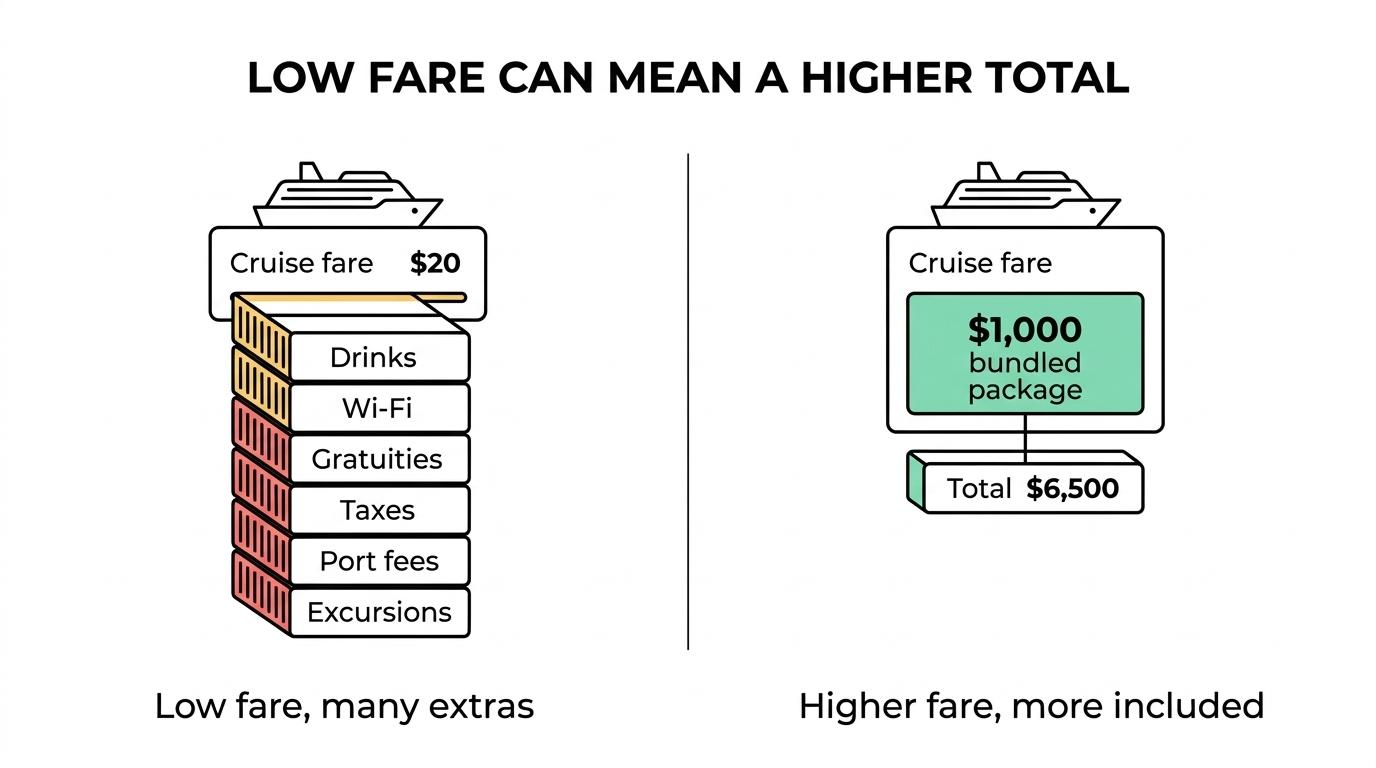
That difference matters because the cheapest cruise package on page one is not always the cheapest trip by final payment. The smartest way to compare cruise packages is to separate what is included automatically from what you will probably add later.
What is usually included in a cruise package?
Most cruise packages include the stateroom, main dining room meals, buffet access, and onboard entertainment. CLIA and NerdWallet also identify pools, kids’ clubs, basic fitness facilities, and many daytime activities as common inclusions on mainstream cruise lines.
For many travelers, the base fare already covers the core vacation framework: a cabin, transportation between ports, standard food, and nightly shows. On Caribbean itineraries, some lines also include access to private islands or private beach destinations as part of the sailing rather than as a separate excursion charge.
CLIA describes cruises as highly inclusive vacations, though it also notes that inclusions vary by cruise line. That variation is the key point. One fare may include room service and fitness classes, while another line charges for some room service orders or premium classes. A common mistake is assuming “all meals included” means every restaurant on the ship is included. It usually means the main dining room, buffet, and a few casual venues.
What costs are usually not included in the advertised cruise fare?
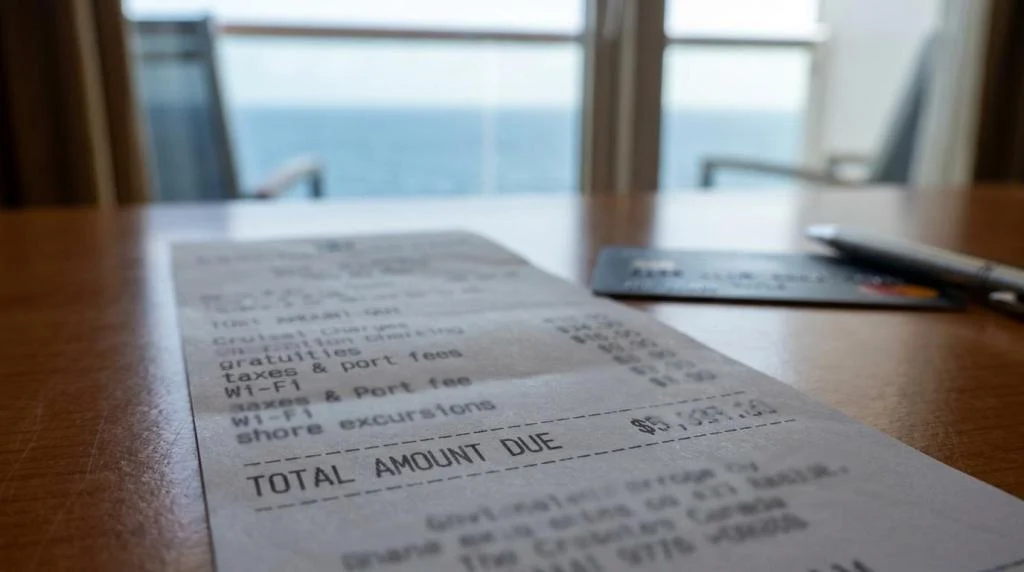
The advertised cruise fare usually excludes several meaningful costs, including gratuities, alcoholic drinks, specialty dining, Wi-Fi, and many shore excursions. NerdWallet also reports that taxes and port fees can add about $100 to $200 per person beyond the headline base price.
This is where cruise packages become confusing for first-time buyers. The front-page fare is often just the starting point. Once you add mandatory or near-mandatory items, the total can look very different. Gratuities alone often run about $14 to $20 per person per day, depending on line and cabin type. Over a weeklong sailing, that is a real budget item.
The other common extras are lifestyle driven. If you drink soda, cocktails, or specialty coffee, you may need a beverage package or a pay-as-you-go plan. If you want stronger internet, specialty restaurants, spa treatments, professional photos, casino play, or organized shore excursions, those usually sit outside the base package. Pro tip: port fees and taxes are easy to overlook because they may appear later in the booking path than the teaser fare.
What are the most common cruise package add-ons?
The most common cruise package add-ons cluster around drinks, dining, connectivity, and time ashore. On Royal Caribbean, Norwegian Cruise Line, and similar mainstream brands, these extras can change the total far more than many travelers expect.
Think of add-ons as four buckets: what you consume, how you stay connected, what you do in port, and how much convenience you want before boarding. If two cruise packages look similar, these are usually the items that create the gap.
- Beverage packages for alcohol, soda, bottled water, and specialty coffee
- Specialty dining plans for steakhouses, chef’s tables, and themed restaurants
- Wi-Fi packages, often priced by device or by internet speed
- Prepaid gratuities, which can simplify budgeting before departure
- Shore excursions, including tours, transfers, and adventure activities
- Travel protection, airport transfers, and pre-cruise hotel options
A useful rule is simple: if the cruise line markets it as premium, exclusive, or specialty, it is probably not part of the standard package. That is not a bad thing. It just means you should price the cruise based on your habits, not someone else’s.
How should you compare cruise packages step by step?
Start by comparing the same sailing conditions across fares. Best Cruise Rates is most useful when you hold itinerary, sail date, stateroom category, and package inclusions constant before judging price.
First, compare the same itinerary and departure date. If one cruise sails seven nights and another sails five, the lower fare tells you very little. Next, match the stateroom category as closely as possible. An inside cabin and a balcony cabin are not price substitutes, even when the itinerary is identical.
Then compare inclusions item by item. If one fare includes drinks, Wi-Fi, and gratuities, and the other does not, you need to decide whether you would have purchased those anyway. If the answer is yes, the higher upfront fare may be the stronger value. If the answer is no, the stripped-down fare may fit better.
“Best Cruise Rates offers a compare tool that can show up to six sailings side by side.”
Finally, add the off-ship costs. Airfare, hotel nights before embarkation, parking, transfers, and travel insurance can erase what looked like a bargain at first glance. Pro tip: compare packages after estimating your own behavior, not after guessing what an average traveler might spend.
Are mainstream cruise lines really all-inclusive?
No, most mainstream cruise lines are not fully all-inclusive. Travel + Leisure reports that brands like Royal Caribbean and Norwegian Cruise Line usually include lodging, standard meals, activities, and entertainment, but typically exclude drinks, specialty dining, Wi-Fi, and gratuities.
This is one of the biggest misconceptions in cruise travel. People hear “all your meals are included” and assume the cruise works like a luxury resort with nearly everything bundled. On mainstream ships, the model is closer to a strong base package plus optional enhancements.
Premium and small-ship lines often bundle more. Depending on the brand and fare, you may see drinks, gratuities, Wi-Fi, shore excursions, and sometimes even pre-cruise hotel stays included. The trade-off is straightforward: a higher initial fare buys more predictability and fewer onboard spending decisions. For travelers who prefer to lock in costs early, that can be worth paying for.
Is it smarter to buy cruise add-on packages before sailing or onboard?
Buying add-on packages before sailing is often cheaper than waiting until embarkation day, especially for beverages and Wi-Fi. If you already know you will use the package, the pre-cruise rate is usually the better benchmark.
This is especially true for beverage packages. Cruise lines frequently discount them before departure, then sell them onboard at a higher rate. Another detail matters here: many lines restrict what alcohol you can bring onboard. A common misconception is that you can pack your own beverages and skip the package entirely. In practice, many major lines allow only limited wine or champagne at embarkation, while hard liquor and beer are generally prohibited.
“Best Cruise Rates notes that onboard beverage packages are often 20% to 30% higher than pre-cruise prices.”
The better decision depends on your habits. If you drink several alcoholic or specialty beverages each day, the package math may work in your favor. If you mostly drink water, basic coffee, or the occasional cocktail, paying à la carte is often the smarter move. The same logic applies to specialty dining and internet. If you know your pattern, buy early. If your usage is uncertain, hold back.
How can you calculate the real cruise total before booking?
Build the total from the fare outward. Best Cruise Rates emphasizes real-time pricing and inventory, but travelers still need to add taxes, port fees, gratuities, transport, and likely onboard extras to see the true trip cost.
A practical method is to price your cruise in layers rather than as a single number. That keeps mandatory charges separate from optional spending and helps you compare packages more accurately.
- Base fare: Stateroom plus standard onboard inclusions
- Mandatory charges: Taxes, port fees, and any required service charges tied to selected packages
- Likely extras: Gratuities, beverages, specialty dining, Wi-Fi, and shore excursions
- Trip logistics: Airfare, pre-cruise hotel, transfers, parking, and travel insurance
If two packages are within a close price range, this layered method usually reveals the better buy. One fare may look lower but require add-ons you were always going to purchase. Another may look expensive until you realize it absorbs several separate charges.
How should first-time cruisers budget for extras?
First-time cruisers should budget for a few extras even on a value fare. A realistic plan covers gratuities, one connectivity option, some drinks, one or two shore excursions, and transport to the port.
Start with the fixed items. Taxes, port fees, and gratuities are the easiest to estimate because they are either disclosed in the booking path or follow predictable line-level policies. Then move to your likely habits. Will you want internet every day? Will you buy specialty dining? Are you traveling with children who may use kids’ clubs while adults book an excursion or spa visit?
The safest budget approach is to rank extras by importance. Pick the one or two things that materially improve your trip, then leave the rest as optional. Pro tip: many travelers overspend on packages they feel they should buy rather than packages they will actually use. A family that spends most days by the pool may get more value from one shore excursion and basic Wi-Fi than from a full drinks plan.
When is a premium or small-ship cruise package worth paying more?
A premium or small-ship package is worth more when you would otherwise buy several extras separately. If your priorities include drinks, Wi-Fi, excursions, and fewer onboard spending decisions, the higher fare can deliver better total value.
The equation becomes clearer on longer or more destination-focused itineraries. If a cruise spends substantial time in port and shore excursions matter to you, bundled excursion credits or included tours can be meaningful. If the line also includes gratuities and internet, the premium narrows further.
This does not mean premium fares always win. If you mainly want a shipboard vacation, rarely drink alcohol, skip specialty dining, and do not need constant Wi-Fi, a mainstream cruise package can remain the best choice. The right answer depends on what you would have paid for anyway. Cruise packages reward clear priorities. Once you know your likely onboard behavior, the package that looks more expensive on page one may become the most efficient choice by the time you board.