Southeast Asia Cruise in January: Full Planning Guide
Planning a Southeast Asia cruise in January? Compare Singapore, Thailand and Vietnam itineraries, weather, visa rules, flight costs and realistic fare ranges.
In this article
January is one of the best months of the year to take a Southeast Asia cruise, and the reason is simple: the northeast monsoon has pushed the heaviest rain out of much of mainland Southeast Asia, humidity eases, and the Gulf of Thailand and South China Sea are generally calmer than in the fall. If you want Singapore, Phuket, Ho Chi Minh City and Ha Long Bay in one trip without fighting afternoon downpours, a January sailing is the sweet spot of the dry season.
The catch is that January is also peak season, which means fares and flights sit at the higher end of the year, and Lunar New Year can collide with your dates depending on the calendar. This guide covers what the season actually looks like, which itineraries exist and how they differ, what you should budget for fare plus airfare plus visas, and how to verify the details before you put down a deposit.
Why January Works for Southeast Asia

Photo: Traveller-Reini · CC0
Southeast Asia does not have a "winter" in the temperature sense. Daytime highs in Singapore, Bangkok and Ho Chi Minh City sit in the upper 80s to low 90s Fahrenheit for most of the year. What changes is rainfall and humidity.
From roughly November through March, the northeast monsoon brings drier, slightly cooler air to much of mainland Southeast Asia. For a cruise passenger, that translates into a few practical things:
- Port days are more usable. Rain in the wet season tends to come as heavy afternoon bursts, exactly when you are walking around a temple complex or riding a tender to a beach.
- Sea conditions are generally better. The Gulf of Thailand and the Andaman Sea are typically calmer in January than during the October to November transition.
- Northern Vietnam is cool, not hot. Ha Long Bay and Hanoi in January can run in the 60s Fahrenheit with gray mist. That surprises a lot of first-timers who pack only shorts.
The tradeoff is that this is also when North American and European travelers want to be somewhere warm, so you are competing for cabins and seats with everyone else escaping winter. If your priority is lowest price rather than best weather, the shoulder months of late March through May or September through October are cheaper, in the same way that Caribbean fares swing by month for reasons that have nothing to do with the ships themselves.
The Lunar New Year factor
Lunar New Year, also called Tet in Vietnam and Chinese New Year in Singapore and Malaysia, moves on the Gregorian calendar. It can fall anywhere from late January to late February. Check the exact date before you lock in dates, because it changes your trip in ways that are easy to miss:
- In Vietnam, Tet is a multi-day national holiday. Many family-run shops, restaurants and smaller tour operators close. Cities empty out as people travel to their hometowns, and domestic transport is jammed.
- In Singapore and Malaysia, Chinatown and heritage districts get spectacular decorations and street markets, which is a genuine reason to go then.
- Flight prices into and out of Asian hubs spike in the week on either side of the holiday.
Neither outcome is automatically bad. It just needs to be a decision rather than a surprise.
The Three Main Itinerary Shapes
Southeast Asia cruising is not one product. The itineraries break into recognizable patterns, and the pattern you choose drives your flight cost, your port mix and your total trip length more than the ship does.
1. Singapore round trip, 7 to 10 nights
This is the most accessible format for a first Southeast Asia cruise. You fly into Singapore Changi, board in Singapore, and return there.
Typical port mix:
- Port Klang (gateway to Kuala Lumpur, roughly an hour inland)
- Penang, Malaysia
- Phuket or Krabi, Thailand
- Langkawi, Malaysia
- Occasionally Ko Samui or Laem Chabang on longer versions
Why it works: One flight city, one hotel booking on each end, no open-jaw airfare complexity. If something goes wrong with a flight, you only have one arrival airport to worry about.
Why it might not: You will not see Vietnam on a short Singapore round trip. The sailing distance is too long for a seven-night loop.
2. Singapore to Hong Kong (or the reverse), 10 to 16 nights
This is the classic one-way Southeast Asia voyage and the itinerary most people picture when they think of this region.
Typical port mix:
- Singapore
- Ko Samui or Laem Chabang (for Bangkok)
- Sihanoukville, Cambodia (sometimes)
- Phu My, Vietnam (for Ho Chi Minh City)
- Nha Trang, Vietnam
- Da Nang/Chan May, Vietnam (for Hue and Hoi An)
- Ha Long Bay or Hon Gai, Vietnam (for Hanoi)
- Hong Kong
Why it works: Vietnam is the headline here, and you get the full north-to-south spread of the country in one trip.
Why it might not: You need open-jaw airfare, flying into one city and home from another. That usually costs more than a round trip, though not always by much on long-haul Asia routes.
3. Long exotic voyages and world cruise segments
Some ships pass through Southeast Asia as part of a longer repositioning arc or a world cruise. These segments can be 14 to 30 nights and often include stops in Indonesia, Brunei, the Philippines or Japan on the way north.
These are the itineraries where the per-day math gets interesting. Because the line needs to move the ship anyway, the daily rate on a long one-way segment is often lower than on a tightly packed seven-night loop, for the same reasons described in our guide to why repositioning cruises are cheaper per day. The total cost is still higher because the trip is longer, but the value per night can be excellent.
Port-by-Port: What You Actually See

Photo: Arian Zwegers · BY
Here is where itineraries earn or lose their value. Two Southeast Asia cruises can look similar on a brochure map and deliver completely different days ashore.
Singapore
Most Southeast Asia cruises embark or disembark at the Marina Bay Cruise Centre Singapore or the Singapore Cruise Centre at HarbourFront. These are different terminals on opposite sides of the city. Confirm which one your ship uses before you book a hotel, because a taxi between them is a real trip, not a five-minute hop.
Singapore deserves at least two nights on land, ideally three. Gardens by the Bay, the hawker centres, the Botanic Gardens and Chinatown easily fill that. Immigration and the airport are famously efficient, which makes it a low-stress entry point for a first-time Asia traveler.
Phuket and Krabi, Thailand
Phuket is usually a tender port, meaning the ship anchors and small boats shuttle you ashore. Tender ports add time on both ends and can be cancelled in rough conditions. January conditions on the Andaman side are usually good, but this is worth knowing when you plan a long shore excursion.
What people do here: Phi Phi Islands and James Bond Island boat trips, Big Buddha, Old Phuket Town, or simply a beach day. If you have mobility concerns, note the long-tail boat boarding on island tours involves stepping into a boat from shallow water in some cases.
Laem Chabang, Thailand (for Bangkok)
This is the port for Bangkok, and the distance matters: Laem Chabang is roughly 80 miles from central Bangkok, which is typically a two to two and a half hour drive each way depending on traffic. On a single-day call, that means four to five hours in a vehicle.
Practical options:
- Take the ship's Bangkok excursion and accept the long day.
- Stay local and see Pattaya, the Sanctuary of Truth or Ko Lan instead.
- If the ship overnights at Laem Chabang (some longer itineraries do), Bangkok becomes genuinely worthwhile with a hotel stay.
Look specifically for the overnight. It is the single biggest differentiator between two otherwise identical Thailand itineraries.
Sihanoukville, Cambodia
Some itineraries call here. Angkor Wat is not a day trip from Sihanoukville; Siem Reap is far to the north and requires a flight. What you can reach is the coastal area and the islands. If Angkor is your dream, plan it as a separate pre- or post-cruise land extension flown in from Phnom Penh, Bangkok or Ho Chi Minh City.
Phu My, Vietnam (for Ho Chi Minh City)
Phu My is the industrial port serving Ho Chi Minh City, roughly a two-hour drive from the city center. Same math as Laem Chabang: a long transfer in each direction. Overnight calls at Phu My exist on some itineraries and transform the port from a rushed highlight tour into a real city visit, including the Cu Chi Tunnels and a proper evening in District 1.
Nha Trang, Vietnam
A tender port in most cases. Beach town with a long waterfront, Po Nagar Cham Towers, and a lively local market. Lower-key than the big-city calls, which many people appreciate midway through a busy itinerary.
Chan May or Da Nang, Vietnam
This is the gateway to Hue and Hoi An. Hoi An's old town, a UNESCO World Heritage site, is the draw for most passengers, and the drive from Chan May is roughly an hour and a half. Hue's Imperial City is in the other direction, similar distance. You usually pick one, not both.
January weather in central Vietnam is the regional wildcard. This stretch of coast can be cool, overcast and drizzly in January even when Singapore is sunny. Pack a light rain layer.
Ha Long Bay / Hon Gai, Vietnam
The limestone karst scenery is the postcard image of Vietnam. Larger ships typically anchor and tender, or dock at Hon Gai. From here, Hanoi is roughly a two and a half to three hour drive, so again, you are choosing between the bay itself and the capital.
January in northern Vietnam means temperatures possibly in the 55 to 68 Fahrenheit range with mist. That mist is atmospheric in photos of the karsts and chilly in a t-shirt. Bring a fleece or light jacket.
Hong Kong
Technically the northern bookend rather than Southeast Asia, but it is where many of these voyages begin or end. Kai Tak Cruise Terminal and Ocean Terminal are the two main facilities, and they are in different places. Again, confirm which one before booking a hotel.
What a January Southeast Asia Cruise Costs
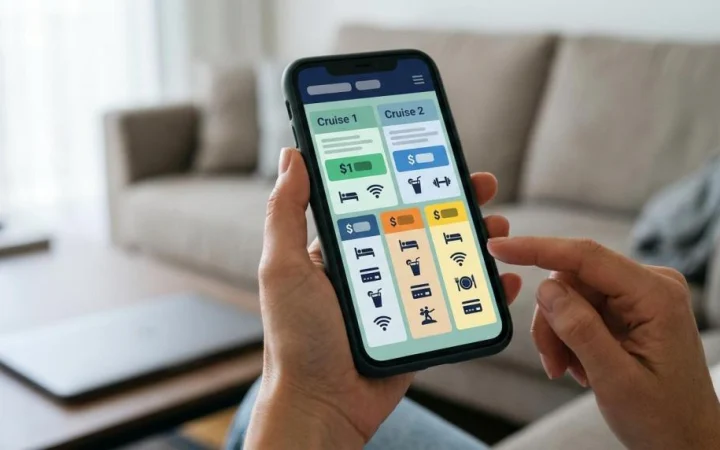
Cruise pricing moves constantly based on ship, cabin category, how full the sailing is and how far out you book, so treat the following as planning ranges rather than quotes. The useful exercise is to break the trip into its four real cost buckets.
| Cost bucket | What drives it | Planning range (per person) |
|---|---|---|
| Cruise fare | Line, ship age, cabin type, length, demand | Mainstream contemporary lines often start in the low-to-mid hundreds per person for an inside cabin on a shorter Singapore loop; premium and luxury lines on long Vietnam voyages run into the thousands |
| Long-haul airfare | Departure city, open-jaw vs round trip, how far ahead you book | US to Singapore in January frequently lands in the high hundreds to well over a thousand round trip in economy |
| Pre/post hotel nights | City, how many nights, how close to the terminal | Budget two to four nights total across both ends |
| Shore excursions, visas, tips, drinks | How much you book through the ship vs independently | Highly variable; excursions in this region tend to cost more than Caribbean equivalents because of long transfers |
Why the airfare matters more than the fare
This is the single most important budget insight for Southeast Asia. On a Caribbean cruise from Florida, the fare dominates the budget. On a Southeast Asia cruise, long-haul airfare can rival or exceed the cruise fare itself, especially in January when demand peaks.
Practical consequences:
- Longer cruises amortize the flight better. If you are spending $1,200 on flights, a 14-night voyage spreads that over twice as many days as a 7-night loop. This is why so many people who fly to Asia choose the longer one-way itineraries.
- Book flights early for January. Peak-season long-haul seats do not generally get cheaper as the date approaches.
- Arrive at least two days early. This is not optional advice for a trip where a missed connection means losing a cruise that cost thousands. Two nights gives you a buffer for a delayed flight plus a day to shake off jet lag before you board.
Where the savings actually live
- Inside and oceanview cabins. On port-heavy itineraries where you are ashore most days, the balcony premium buys you less than it does on a sea-day-heavy Caribbean sailing.
- Shoulder dates within January. The first week of January, immediately after the holiday peak, can price differently from mid and late January. Ask for a comparison across multiple departure dates rather than one.
- Guarantee cabins. You accept the line's choice of specific cabin within a category in exchange for a lower rate. Fine if you are flexible, risky if you need a specific deck or an accessible cabin.
- Independent shore excursions. Ship tours in this region carry a premium largely because of the transfer logistics. Reputable local operators often cost meaningfully less. The tradeoff is that the ship waits for its own tours and not for yours, so build a wide time buffer on any independent booking in a distant-city port.
If you want a current number rather than a range, request a free personalized cruise quote with your dates, departure city and cabin preference. Pricing in this region changes week to week.
Documents: Passports and Visas
This is where Southeast Asia differs sharply from a Caribbean cruise, and it is the most common source of last-minute panic.
Passport
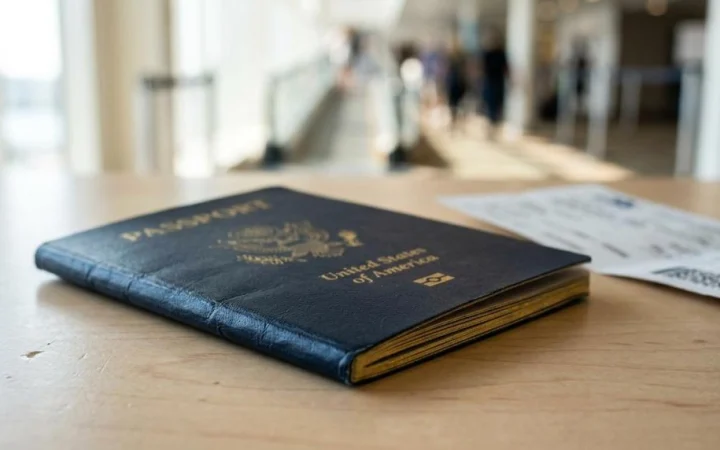
You need a valid passport book, and the practical standard across the region is at least six months of validity beyond your date of entry, plus blank pages for stamps. Not six months from today. Six months from the day you arrive.
There is no closed-loop exception here of the kind that applies to certain Caribbean and Mexico sailings. If your passport expires in five months and your cruise is in January, renew it now. For a full breakdown of how requirements shift by itinerary type, see our guide to passport rules for cruises by itinerary.
Visas
Rules vary by country and by nationality, and they change. Verify every one against the official government source for your citizenship. For US citizens, the authoritative starting point is the US State Department's country information pages.
General shape of the requirements for US passport holders at the time of writing, which you must confirm independently:
- Singapore: Generally no visa required for short tourist stays. An electronic arrival card is typically required before arrival.
- Malaysia: Generally visa-free for short tourist stays, with a digital arrival card requirement.
- Thailand: Generally visa-exempt entry for tourism up to a set number of days.
- Vietnam: This is the one that catches people. Vietnam has historically required a visa or e-visa for US citizens, with specific exemptions sometimes applying to cruise passengers entering and departing with the ship. Cruise lines frequently arrange a group visa for passengers going ashore with ship-organized tours, and the rules for independent exploration can differ. Ask your cruise line in writing what applies to your specific sailing, and do not rely on what was true two years ago.
- Cambodia: Generally requires a visa, often arranged by the cruise line for in-transit passengers.
- Hong Kong: Generally visa-free for short visits by US citizens.
Practical document advice
- Carry physical photocopies of your passport photo page, separate from the passport itself.
- Your ship will usually collect passports for certain port clearances in Vietnam. This is normal.
- Check whether your itinerary requires a face-to-face immigration inspection on a specific morning. Some Vietnam calls do, and missing it can mean you cannot go ashore.
Health and Practical Preparation
Consult the CDC's travel health pages for current vaccine and medication recommendations by country. Typical considerations for this region include routine vaccines plus hepatitis A and typhoid, with malaria prophylaxis rarely recommended for standard cruise port areas but worth discussing if you are adding inland extensions.
Other practical items:
- Mosquito repellent with DEET or picaridin. Dengue is present in the region year-round. Evening dinners ashore are when you will want it.
- Water. Stick to bottled or ship water. Skip ice in very casual street settings unless you know the source.
- Power. Plug types vary. Singapore and Malaysia use the UK-style Type G three-pin plug. Thailand and Vietnam mostly use Type A and C. A universal adapter solves this.
- Cash. Singapore dollars, Malaysian ringgit, Thai baht and Vietnamese dong are separate currencies. Small denominations for taxis and markets are useful. Card acceptance is good in cities, patchy at markets.
- Shoulders and knees covered for temple visits. This is enforced, not suggested, at many sites.
- Walking shoes. Temple complexes and old towns involve far more walking on uneven surfaces than a Caribbean beach day.
Choosing Between Itineraries: A Decision Framework
Rather than comparing ships first, work through these questions in order.
1. How many total days can you be away?
Count honestly. A 14-night Singapore to Hong Kong cruise plus two pre-cruise nights plus flying time in both directions is realistically an 18 to 19 day trip from a US departure city. If you have ten days of vacation, the one-way Vietnam itineraries are off the table and a Singapore round trip is your answer.
2. Is Vietnam the point, or is sun and ease the point?
If the answer is Vietnam, you need the longer one-way itinerary, and you should scrutinize how many Vietnamese ports are included and whether any are overnights. Four Vietnam calls is a meaningfully different trip from two.
If the answer is sun and ease, a Singapore round trip through Malaysia and Thailand is less logistically demanding and usually cheaper all-in.
3. How do you feel about long bus transfers?
This is the honest filter most brochures skip. On a Southeast Asia cruise, several marquee port days involve two to three hours in a coach each way. If that sounds exhausting, prioritize itineraries with overnights in port, or with ports where the attraction is close to the pier (Singapore, Hong Kong, Penang, Nha Trang, Langkawi).
4. Big ship or small ship?
Larger ships bring more dining and entertainment and often lower fares, but they tender more often and disembark thousands of people into the same temple at the same hour. Smaller ships reach some berths more easily and move passengers ashore faster, but cost more per night.
5. What is your total budget, not your fare budget?
Run the four-bucket table above with real numbers for your departure city before you compare cruise fares. A cheaper fare on an itinerary requiring expensive open-jaw flights can lose to a pricier fare with a simple round trip.
How This Compares to Other Winter Options
If you are weighing Southeast Asia against other warm-weather winter cruises, the honest comparison is about effort versus novelty.
| Winter option | Flight time from US | Novelty of ports | All-in cost pressure |
|---|---|---|---|
| Southeast Asia | Very long, usually with a connection | Very high; genuinely different culture, food, history | High, driven mainly by airfare |
| Caribbean | Short, often nonstop to Florida | Lower; beach-focused, familiar | Lowest of the group |
| Panama Canal | Moderate | High for the engineering, moderate for ports | Moderate |
| Dubai and the Gulf | Long | High | Moderate to high |
A Panama Canal cruise in winter is the closest cousin in terms of "serious trip with a signature experience," with much shorter flights. A Dubai winter cruise is the other long-haul option that peaks in the same months, and it tends to involve shorter sailings paired with more land time.
For a family weighing a first big international cruise against something domestic, it is worth noting that the cost gap narrows on longer itineraries. A 14-night Asia voyage amortizes the flight; a week in the Caribbean on a holiday week like Fourth of July carries its own peak-date premium.
A Realistic January Timeline
Here is a workable planning sequence if you are starting from scratch.
12 to 10 months out
- Decide itinerary shape (round trip vs one way) and total trip length.
- Check your passport expiration date against the six-month rule.
- Start watching airfare for your dates.
10 to 8 months out
- Book the cruise. Peak January inventory on the better itineraries, especially cabins with specific locations and accessible cabins, thins out early.
- Confirm which terminal the ship uses in each embarkation/disembarkation city.
8 to 6 months out
- Book long-haul flights, with at least two nights of buffer before embarkation.
- Book pre- and post-cruise hotels.
- Renew passport if needed. Processing times fluctuate; do not cut this close.
4 to 3 months out
- Check visa requirements again against official sources. Rules change.
- Apply for Vietnam e-visa if your sailing requires individual visas.
- Book any independent shore excursions, choosing operators that commit in writing to returning you well before all-aboard time.
- See a travel health provider if vaccines are recommended.
1 month out
- Complete online check-in with the cruise line.
- Complete electronic arrival cards for Singapore and Malaysia (these are usually only valid within a short window before arrival, so note the timing).
- Confirm your travel insurance covers trip interruption and medical evacuation. This matters more on a trip where you are many thousands of miles from home.
Week of
- Download offline maps for each port city.
- Note the ship's local emergency contact number and the US embassy or consulate locations along the route.
- Pack a light rain layer and a warm layer for northern Vietnam.
Common Mistakes to Avoid
Video: "Doing a Cruise in Asia? Know these 10 PRO Tips Before you Set Sail! | Celebrity Solstice" — The Weekend Cruiser (YouTube)
Assuming Southeast Asia is uniformly hot. Northern Vietnam in January can require a jacket. Travelers who pack only tropical clothes end up buying a sweatshirt in Hanoi.
Booking a flight that arrives the morning of embarkation. On a transpacific route with a connection, a single delay can cost you the entire cruise. Two nights early is the standard, not an indulgence.
Expecting Angkor Wat from a coastal port. It is not reachable on a day call. Plan it as a land extension or let it go.
Ignoring tender ports. Phuket, Nha Trang and some Ha Long Bay calls are commonly tender operations. If you have mobility limitations, ask the line directly how tendering is handled on your specific ship.
Treating the visa question as settled. Vietnam's rules for cruise passengers have shifted over the years. Verify for your sailing, in writing, with your cruise line and against official government sources.
Comparing fares without comparing ports. Two itineraries both labeled "Southeast Asia, 12 nights" can have three Vietnam calls or one. Read the day-by-day, not the headline.
Forgetting the holiday calendar. Lunar New Year and the dates immediately around it change what is open, what things cost and how crowded transport is.
Verifying Everything Before You Deposit
Before you commit, run this checklist against the actual booking page and the line's own documentation, not a summary.
- Day-by-day itinerary. Count the Vietnam calls. Note which are docked and which are tendered. Flag any overnights.
- Terminal names for embarkation and disembarkation. Book hotels accordingly.
- Visa and document requirements on the cruise line's official guest documentation page for your sailing.
- Passport validity against your arrival date plus six months.
- Cancellation and deposit terms. On long exotic voyages, final payment dates are often earlier than the 90 days typical of Caribbean sailings. Know the date.
- What is included. Gratuities, port charges, taxes and any beverage or Wi-Fi package. The headline fare is rarely the final number.
- Flight routing. Confirm minimum connection times at your hub, and whether your bags are checked through.
- Insurance coverage limits, especially medical evacuation, which is the expensive category on a far-from-home trip.
If you would rather have someone run these checks and price several departure dates side by side, BestCruiseRates.com provides free personalized cruise quotes by request or phone, including itinerary comparisons for January Southeast Asia sailings. That is useful specifically because this region rewards comparing three or four itineraries on port content and total cost rather than picking the cheapest headline fare.
The Short Version
A Southeast Asia cruise in January gives you some of the most comfortable weather of the year across much of Malaysia, Thailand and southern Vietnam, with Singapore warm and humid as always, at the cost of peak-season fares and airfare. Choose a Singapore round trip if your vacation days are limited and ease matters most; choose a Singapore to Hong Kong one-way if Vietnam is the reason you are going.
Budget the trip in four buckets, not one, and expect long-haul airfare to be a major line item. Verify passport validity against the six-month rule and confirm Vietnam's visa requirement for your specific sailing in writing. Arrive two days early. Pack a light jacket for the north.
Do those things, and January in Southeast Asia is about as good as winter cruising gets.