Can You Cruise Alaska in Winter? What to Know
Can you cruise Alaska in winter? Almost no big ships sail Oct-Apr. Here is why the season closes, the few exceptions, and warm-weather cruises to book instead.
In this article
Short answer: no, not in any practical sense. The mainstream Alaska cruise season runs roughly from late April through early October, and by mid-October virtually every large cruise ship has left Alaskan waters for the Caribbean, Mexico, Hawaii, or the South Pacific. If you search for a January sailing from Seattle or Vancouver to Juneau on any major line's own booking engine, you will almost certainly get no results, because the ships have relocated thousands of miles south to warm-weather regions. The only year-round vessels in Southeast Alaska are the state-run Alaska Marine Highway ferries, which are public transportation rather than cruises, plus a handful of small expedition operators that occasionally run late-season or special-interest trips.
That said, "no winter Alaska cruise" is not the end of the conversation. There are three useful follow-ups: why the season closes so hard, what you can actually do in Alaska in winter without a cruise ship, and which winter cruises deliver the scenery, wildlife, and shoulder-season value that drew you to Alaska in the first place. This guide covers all three, with concrete price context and booking timing.
Why do cruise ships stop sailing to Alaska in winter?
Four reasons stack on top of each other, and any one of them alone would be enough.
Daylight collapses. Juneau gets a little over six hours of daylight around the winter solstice, and the sun sits low the whole time. Alaska cruising is a scenery product. You pay for Glacier Bay, Tracy Arm, Hubbard Glacier, and the Inside Passage. In December you would sail most of the route in darkness and see very little of what you came for. In June, by contrast, Juneau sees roughly 18 hours of daylight, which is why the season is built around the solstice.
Weather turns genuinely rough. The Gulf of Alaska in winter is one of the more serious stretches of water in the Northern Hemisphere. Autumn and winter storms generate sustained high winds and large swells. Large cruise ships are built to handle heavy seas, but cruise lines are not in the business of selling a week of 20-foot seas and closed outer decks to vacationers.
Ports and shore excursions shut down. Skagway, Ketchikan, Haines, and Icy Strait Point are small communities whose visitor economies are tuned to the May-to-September window. The White Pass and Yukon Route railway, floatplane glacier tours, whale watching charters, and most downtown shops operate seasonally. Juneau's Mendenhall Glacier Visitor Center reduces hours sharply in winter. A winter port call would mean a quiet main street and almost nothing bookable.
The ships earn far more elsewhere. This is the decisive commercial point. A Royal Caribbean or Princess ship that would be struggling to fill an October Alaska sailing can be filled at a higher price doing seven-night Eastern Caribbean runs out of Fort Lauderdale or Miami in January and February, which is peak Caribbean demand. Cruise lines move hardware to wherever the revenue per available berth-day is highest. That move south is the reason repositioning cruises exist in the first place.
What the season actually looks like, month by month
| Period | Ship presence | What is typical |
|---|---|---|
| Late April to mid-May | Season opening, ships arriving | Lowest fares of the season, cool and wet, some excursions not yet running |
| June | Full fleet | Longest daylight, strong wildlife activity, higher prices |
| July to mid-August | Full fleet, peak | Warmest, busiest, highest fares, family travel peak |
| Late August to mid-September | Full fleet, winding down | Fall color, northern lights become possible, fewer kids, softer pricing |
| Late September to early October | Final sailings, ships departing | Season-closing fares, shorter days, higher storm risk |
| Mid-October to mid-April | Essentially none | Big ships are in the Caribbean, Mexico, Hawaii, Asia, Australia |
If you want a sense of how the calendar drives price in a year-round region, our breakdown of the cheapest month to cruise the Caribbean shows the same supply-and-demand mechanics working in the opposite direction.
Are there any ships at all in Alaska between November and March?
There is no large-ship cruise product. There are, however, three categories of vessel that stay or appear.
The Alaska Marine Highway System. This is the state ferry network, operated by the Alaska Department of Transportation, and it runs year-round between Bellingham, Washington, and Southeast Alaska ports including Ketchikan, Wrangell, Petersburg, Juneau, Haines, and Skagway, plus routes in Southcentral and Southwest Alaska. You can book a cabin, bring a vehicle, and sail the Inside Passage in January. Schedules are reduced in winter and subject to change, and you should check current timetables on the state's official site at dot.alaska.gov/amhs. Be clear about what you are buying: this is transportation. There is no entertainment program, no specialty dining, no shore excursion desk, and no guarantee of good weather or daylight. People who love it love it genuinely. People expecting a cruise ship are disappointed.
Small expedition and adventure vessels. A small number of operators run late-season or specialty voyages into September and occasionally October, and a few run winter wildlife or photography charters in specific areas. These are typically 12 to 100 passengers, priced well above mainstream cruise rates, and sold as expeditions rather than vacations. Availability changes year to year, so verify directly with the operator rather than assuming last year's schedule repeats.
Repositioning sailings in the shoulder. In late September and early October, ships leaving Alaska often operate one-way voyages south, typically Vancouver or Seward to San Francisco, Los Angeles, San Diego, or onward to Hawaii or through the Panama Canal. These are the last chance to see Alaska by ship in a given year, and they are frequently the best per-day value of the entire Alaska calendar. More on these below.
Can you visit Alaska in winter without a cruise?
Yes, and for some travelers winter is actually the better Alaska trip. It is simply a land trip, not a sea trip.
Winter in Alaska is built around things summer cannot offer:
- Aurora viewing. Fairbanks sits under the auroral oval and is the standard base for northern lights travel. The viewing season runs roughly late August through April, with the darkest, longest nights from December through March. Multi-night stays matter, because cloud cover on any single night can shut you out.
- Iditarod. The ceremonial start in Anchorage is held in early March each year, with the official restart in the Willow area. Dates and details come from the Iditarod Trail Committee at iditarod.com.
- Fur Rendezvous. Anchorage's long-running winter festival, typically late February.
- Dog sledding, snowmachining, ice fishing, and hot springs. Chena Hot Springs outside Fairbanks is a common aurora-plus-soak combination.
- Lower prices and far fewer people. Hotel rates in Anchorage and Fairbanks in January bear no resemblance to July rates, and you will not be sharing a glacier overlook with four ships' worth of passengers.
The tradeoffs are real. Temperatures in Fairbanks routinely run well below zero Fahrenheit in January. Many Southeast attractions and roadside businesses are closed. Driving requires winter tires and real winter driving judgment. Daylight is short, which compresses what you can do per day. And you will not see Glacier Bay by ship, because the park's cruise ship permits and visitor services are summer-season operations.
A reasonable framing: winter Alaska is a northern lights and dog sled trip based out of Fairbanks and Anchorage. Summer Alaska is a glacier, whale, and Inside Passage trip based on a ship. They are different vacations that happen to share a state.
When is the cheapest time to cruise Alaska if winter is out?
Video: "The Best Time of Year to Take an Alaska Cruise | When Should I Cruise to Alaska?" — Eat Sleep Cruise (YouTube)
The two cheapest windows are the bookends: late April to mid-May, and late September to early October. Both routinely price below peak July fares for the same ship and similar cabin, often by a meaningful margin.
Here is how the season typically stacks up in terms of relative fare pressure. Treat these as directional, not quoted prices, since fares move with the ship, line, cabin, sailing date, and how the line is pacing bookings:
| Window | Relative fare | What you gain | What you give up |
|---|---|---|---|
| Late April to mid-May | Lowest | Best prices, snow still on peaks, fewer crowds, bears emerging | Cooler, wetter, some tours not yet open |
| June | Higher | Maximum daylight, strong wildlife | Price climbs fast |
| July to mid-August | Highest | Warmest, everything operating | Peak crowds and peak fares |
| Late August to early September | Moderate | Fall color, salmon runs late, northern lights possible on clear nights | Shorter days, rain increases |
| Mid-September to early October | Low | Season-closing deals, quiet ports | Weather risk, short days, closures begin |
A practical note on cabins: in shoulder season, the balcony-versus-inside decision changes. In July, a balcony in Alaska gets used constantly. In late September, you may spend most of your scenic cruising time in a heated forward lounge instead. If the price gap between an oceanview and a balcony is large on a late-season sailing, the oceanview is more defensible than it would be in June.
What winter cruises give me the closest feel to Alaska?
Nothing fully replaces glaciers and the Inside Passage in a single January itinerary. But if you break Alaska down into what you actually wanted, you can match each piece to a winter-season destination.
If you wanted dramatic scenery from the deck
Chile and Argentina, including Patagonia and the Chilean fjords. December through March is the Southern Hemisphere summer, and itineraries from Santiago or Buenos Aires around Cape Horn through the Beagle Channel and the Chilean fjords deliver glaciers, fjords, and mountain walls on the same visual scale as Southeast Alaska. These are usually 14 nights or longer, and they are not cheap, but they are the closest direct substitute. Amalia Glacier is a frequent scenic cruising highlight.
Antarctica. The expedition season is roughly November through March. This is the most expensive mainstream-adjacent cruise product on earth, often running into five figures per person on the small expedition ships, with a small number of larger ships offering Antarctica scenic cruising without landings at a lower price point from South American homeports. If icebergs and wildlife were the Alaska draw, this is the maximum version.
New Zealand's Milford, Doubtful, and Dusky Sounds. Many Australia and New Zealand itineraries from January through March include scenic cruising in Fiordland National Park. Sheer cliffs, waterfalls, dense green walls rising straight out of the water. Different climate, similar awe.
If you wanted engineering and a one-of-a-kind transit
The Panama Canal. Peak season is December through April, which lines up exactly with the months Alaska is closed. The locks are a genuine spectacle, the scenery is tropical rather than alpine, and the itinerary structure is unusual in a way Alaska fans tend to appreciate. The key decision is whether you want a full transit ocean to ocean, usually 14 to 16 nights, or a partial transit that enters the locks and returns, usually 10 to 11 nights from Florida. Our guide to the Panama Canal cruise in winter, full versus partial transit walks through the differences.
If you wanted wildlife
Mexican Riviera and Baja. Gray whales migrate to the lagoons of Baja California roughly January through March. Some Mexico itineraries and many small-ship Sea of Cortez voyages are built around this. You will not see humpbacks bubble-net feeding, but you will see whales.
Galapagos. Year-round, with the warmer wetter season running roughly December through May. Small ships only, naturalist-guided, expensive, and completely unlike a mainstream cruise. If the Alaska appeal was animals at close range, this is the strongest winter match.
If you mostly wanted a great-value week on a nice ship
The Caribbean. This is where the Alaska fleet goes, which means you can often sail the exact same ship you were eyeing for Juneau, just with a different view. Early December and the first half of January after New Year's are the softest pricing windows of the winter Caribbean season.
Hawaii. Pride of America operates inter-island round trips from Honolulu year-round, and several lines run longer Hawaii round trips from the West Coast in winter. If you want a Pacific trip without flying to Florida, this is the option.
Dubai and the Arabian Gulf. November through March is the entire season there, because summer is unbearably hot. It is the mirror image of Alaska's calendar. See our Dubai cruise in winter guide for season, ports, and price context.
Southeast Asia. January is a strong month for Singapore, Thailand, and Vietnam itineraries. The Southeast Asia cruise in January planning guide covers routing and what to expect.
Should I book a repositioning cruise out of Alaska instead?
If your goal is to see Alaska from a ship at the lowest possible price per day, and you have flexibility on travel dates and one-way flights, this is often the single best answer.
Here is the mechanic. Every September and October, a ship that has spent the summer doing seven-night Vancouver-to-Seward or round-trip Seattle runs has to get to its winter homeport. That might be Los Angeles, San Diego, San Francisco, Fort Lauderdale, Miami, Honolulu, Sydney, or Singapore. The line sells that relocation voyage as a cruise. Because the demand pool for a one-way, sea-day-heavy, odd-length itinerary is smaller than the demand pool for a standard week in the Caribbean, the per-night price drops.
What you typically get:
- Alaska scenic cruising on the front end, often including Ketchikan or an Inside Passage segment
- A string of sea days down the Pacific coast
- Possible calls in Victoria, Astoria, San Francisco, Monterey, Santa Barbara, Ensenada, or Cabo San Lucas depending on routing
- Longer itineraries, often 10 to 21 nights
- Lower nightly rates than a comparable peak-season week
What you give up:
- Convenience. One-way flights home, and the departure and arrival cities differ.
- Weather certainty. Late-season Gulf of Alaska and North Pacific crossings can be rough.
- Port density. If you need a new town every day, a repositioning voyage will frustrate you.
The economics are worth running honestly. A longer sailing at a lower nightly rate still costs more in total than a short cheap week, and you add airfare complexity and more days of onboard spending. We lay out the full calculation in repositioning cruises and why they are cheaper per day.
A related consideration: on a sailing with many sea days, beverage spending tends to rise, because there is more time onboard and fewer port days pulling you ashore. Run the numbers before you buy a package rather than after, using our walkthrough on whether a cruise drink package is worth it.
When should I book an Alaska cruise for next summer?
Most travelers get the best combination of price and cabin choice by booking 9 to 14 months ahead, which in practice means booking during the winter for the following summer. There are three reasons this window works.
Cruise lines open inventory early and price it to build momentum. Alaska summer schedules typically go on sale a year and a half to two years out. Early fares reward early commitment, especially on the categories that sell out first.
The good cabins go first, not last. Alaska is a scenery cruise, which means balconies, and particularly port-side or starboard-side balconies on specific one-way routings, are the most contested inventory on the ship. Waiting for a last-minute deal in Alaska usually means waiting for whatever nobody else wanted. This is the opposite of the Caribbean, where late inventory is deep.
Land and excursion capacity is finite. The White Pass railway, Denali rail and lodge packages, bear viewing flights to Katmai or Lake Clark, and helicopter glacier landings all have hard capacity ceilings. If a cruisetour with Denali is part of the plan, book it with the cruise.
Practical booking checklist for a summer Alaska cruise:
- Pick the route shape first. Round trip from Seattle is simplest and cheapest on airfare, and it includes a Canadian port call. One-way between Vancouver and Seward or Whittier gets you Hubbard Glacier and College Fjord and connects to Denali, but costs more in flights. Round trip from Vancouver is a middle path.
- Decide on Glacier Bay. The National Park Service limits the number of cruise ship entries per season, so not every itinerary includes it. If Glacier Bay is a must, confirm it appears in the itinerary before booking, not after.
- Choose the cabin deliberately. Balcony is the default recommendation for June through August. Inside cabins are defensible in late April and late September when you will be in lounges anyway.
- Book marquee excursions early. Helicopter glacier landings, bear viewing flights, and the train sell out.
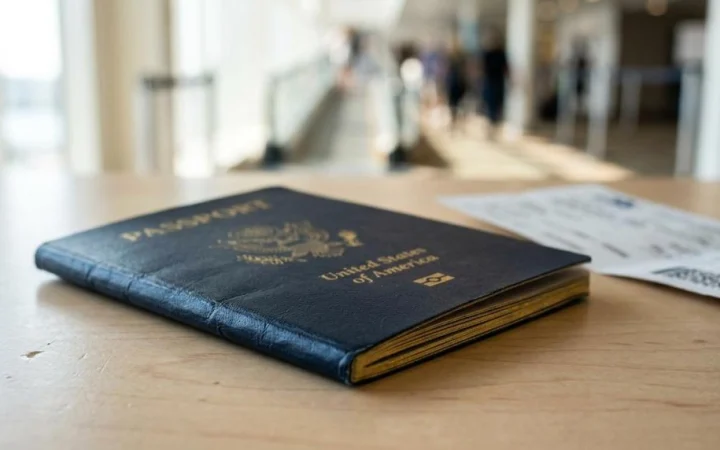
- Sort documents. Most Alaska itineraries touch Canada, which changes the ID requirements. Our guide on whether you need a passport for a cruise covers the rules by itinerary type, and a passport is the safest document for any Alaska sailing.
- Watch the deposit and final payment dates. Final payment is typically 90 to 120 days before sailing depending on line and itinerary length. Price protection and change policies vary, so read the fare rules attached to your specific booking.
What should I pack for a shoulder-season Alaska cruise?
Layers, waterproofing, and footwear you can walk in. Alaska in May or September is not arctic, but it is cool, often wet, and windy on open decks during scenic cruising.
The core kit:
- Waterproof shell jacket with a hood. Not water resistant. Waterproof. Rain in Southeast Alaska is routine, and Ketchikan is one of the wettest places in the United States.
- Mid layer fleece or light insulated jacket. This is what you actually wear most of the time.
- Base layers. Merino or synthetic. Cotton underlayers get clammy and stay clammy.
- Warm hat and gloves. On a glacier day, a thin pair of gloves is the difference between enjoying the deck and going inside.
- Waterproof walking shoes or light hiking boots. Port towns involve walking on wet surfaces.
- Binoculars. Underrated. Whale spouts and bald eagles are often further away than you expect.
- A dry bag or ziplock for your phone on any small boat excursion.
- One smart-casual outfit for dining rooms and specialty restaurants.
Skip the heavy parka unless you are doing a winter land trip. For a cruise, a shell plus fleece handles almost everything. Our general cruise packing checklist for first time cruisers covers the non-weather items such as power strips, medications, and documents.
Is the Alaska Marine Highway a reasonable winter alternative?
For the right traveler, yes. For most cruise shoppers, no. Be honest with yourself about which you are.
It works well if you:
- Want the Inside Passage scenery without any interest in entertainment, casinos, or specialty dining
- Are comfortable with basic cabins, cafeteria-style food, and schedules that can shift with weather
- Want to bring a vehicle to Southeast Alaska
- Are combining it with a longer independent trip and treating the ferry as transportation plus a view
- Value the fact that you will be traveling alongside Alaskans going about their actual lives
It does not work if you:
- Expect cruise-ship service levels, amenities, or dining
- Are traveling with kids who need onboard activity
- Have rigid flight connections on either end
- Want long daylight scenic cruising, which winter cannot provide
Winter ferry schedules are reduced compared with summer, and the system has experienced service adjustments in recent years. Check the published timetable at dot.alaska.gov/amhs for current routes and sailing dates before you build a trip around it.
Can I see the northern lights on an Alaska cruise?
Only at the very edges of the season, and only with luck. The core summer months are the problem: in June and July, Southeast Alaska barely gets astronomical darkness, so even a strong aurora has no dark sky to display against.
Your realistic cruise-based odds improve in late August and September, when nights lengthen. Sightings do happen on late-season sailings, usually in the small hours, usually from a dark outer deck away from the ship's lighting. But a cruise is a poor aurora-hunting platform: the ship's own lights are bright, you cannot relocate to escape clouds, and you are generally south of the most active auroral zone.
If the northern lights are the actual goal, book Fairbanks in winter and stay at least three nights, ideally four or five. The viewing season there runs roughly late August into April, with the best combination of darkness and clear-weather odds in the deep winter months. The University of Alaska Fairbanks Geophysical Institute publishes a public aurora forecast at gi.alaska.edu/monitors/aurora-forecast. Pairing a September Alaska cruise with a few days in Fairbanks afterward is a sensible way to get both products in one trip.
What about a holiday cruise if I just want a winter vacation?
If the real driver was "we want a cruise over winter break," Alaska was never going to be the answer, and your options are wide open. Three notes on winter holiday sailings:
Christmas and New Year's are the most expensive weeks of the Caribbean year. Expect to pay a premium over a comparable week in early December or late January. Book these far ahead, because demand is inelastic and cabins for four sell out first.
Early December is the sleeper value window. After the Thanksgiving rush and before the holiday surge, the first two weeks of December frequently price near the bottom of the winter range on the same ships and itineraries.
Holiday programming varies by line. If decorations, tree lighting ceremonies, and themed dining matter to your family, the line matters more than the itinerary. For a sense of how one line handles themed sailings, see our pieces on the Royal Caribbean 4th of July cruise and the Royal Caribbean Veterans Day cruise.
For families specifically, new hardware is arriving in Florida over the next couple of seasons, including Disney's expanding fleet; our note on the Disney Believe cruise ship Fort Lauderdale debut covers what is coming and from where.
Quick reference: Alaska in winter, decision table
| Your goal | Best winter option | Notes |
|---|---|---|
| See Alaska glaciers from a ship | Not possible Nov-Mar | Book late April or September instead |
| Inside Passage scenery in winter | Alaska Marine Highway ferry | Transportation, not a cruise; reduced winter schedule |
| Northern lights | Fairbanks land trip, 3+ nights | Aurora season roughly late Aug-Apr |
| Glaciers and fjords by ship in winter | Chilean fjords and Patagonia | Dec-Mar, typically 14+ nights |
| Icebergs and polar wildlife | Antarctica expedition | Nov-Mar, high cost |
| Dramatic scenic cruising, moderate cost | New Zealand Fiordland | Jan-Mar on Australia and NZ itineraries |
| Unique transit and warm weather | Panama Canal | Dec-Apr peak; choose full or partial |
| Whales in winter | Baja gray whale season | Roughly Jan-Mar |
| Best overall value cruise week | Caribbean, early Dec or mid-Jan | Often the same ships that summer in Alaska |
| Lowest Alaska price per day | Sept-Oct repositioning sailing | One-way flights, many sea days |
The bottom line
You cannot cruise Alaska in winter on a mainstream ship, and that is a function of daylight, weather, closed ports, and simple fleet economics rather than any rule you can work around. The honest options are three: take the state ferry if you want Inside Passage water in January and are fine with basic transportation, fly to Fairbanks if what you really want is the aurora and dog sledding, or shift your cruise to a destination whose season is winter.
If Alaska specifically is the dream, the best move is to use the winter to book next summer. Late April and September sailings typically price well below July for the same ship, the late-season repositioning voyages often offer the lowest per-day cost of any Alaska product, and booking 9 to 14 months out gets you the balcony and the excursions you actually want rather than the leftovers.
If you want a second opinion on a specific sailing, cabin category, or shoulder-season date, request a free personalized cruise quote from BestCruiseRates.com or call and talk it through. There is no charge for asking, and a ten-minute conversation about whether a one-way Vancouver-to-Seward routing is worth the extra airfare is usually worth more than another hour of scrolling.