Do You Need Travel Insurance for a Cruise? A Clear Answer
Do you need travel insurance for a cruise? Here is what cruise policies actually cover, what Medicare does not, real cost ranges, and when to skip it.
In this article
Short answer: for most cruises, yes, some form of travel protection is worth buying, and the single strongest reason is medical. A shipboard medical center bills like an out-of-network urgent care, Medicare generally does not pay for care outside the United States, and a medical evacuation from a ship at sea or a remote port is the one travel expense that can run into five or six figures. Trip cancellation coverage is the part people shop for, but emergency medical and evacuation coverage is the part that actually protects your household finances.
That said, "buy insurance" is not a blanket rule. If you are driving two hours to Port Canaveral for a $600 four-night Bahamas sailing, already carry a credit card with trip protection, and have a health plan that covers you on a ship docked in US waters, the math looks very different than it does for a 14-night Panama Canal transit with $900 in nonrefundable airfare attached. Below is a practical breakdown of what cruise travel insurance covers, what it does not, what it costs, and how to decide for your specific booking.
What does cruise travel insurance actually cover?
Video: "NEVER Buy Cruise Travel Insurance Until You Watch This (For 60+)" — Damian Tysdal, CoverTrip (YouTube)

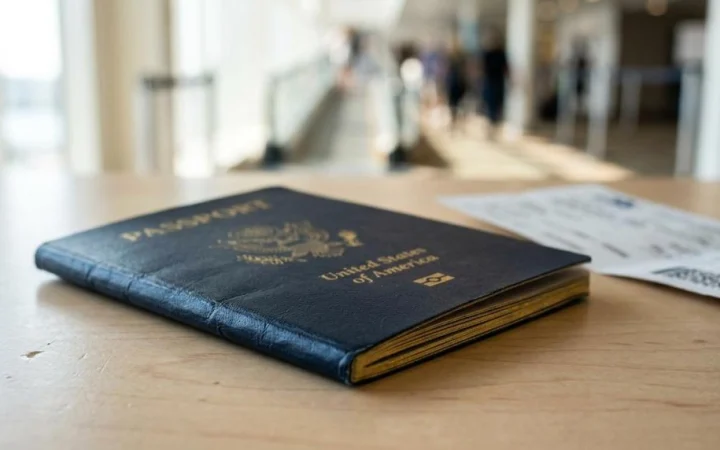
Photo: Faisal Ahammad · CC0
Most comprehensive travel insurance policies sold for cruises bundle six or seven distinct coverages into one plan. They are not equally valuable, and the ones that matter most are usually not the ones advertised first.
Trip cancellation. Reimburses prepaid, nonrefundable costs if you cancel before departure for a covered reason. Covered reasons are a specific list: your own illness or injury, illness or death of a family member, jury duty, a named hurricane making your home uninhabitable, and similar events. "I changed my mind" and "work got busy" are not on the list unless you buy a Cancel For Any Reason upgrade.
Trip interruption. Kicks in after departure. If you have to fly home from a port mid-cruise because of a family emergency, this covers the unused portion of the cruise plus the cost of getting home.
Emergency medical. Pays for treatment you receive while traveling, including the shipboard medical center and shoreside hospitals. This is the coverage that justifies the purchase for most travelers.
Emergency medical evacuation and repatriation. Pays to move you from where you are to appropriate care, and, in the worst case, to return remains home. This is the catastrophic-cost line item.
Travel delay. Pays a daily cap for meals and lodging when a covered delay exceeds a waiting period, commonly 6 to 12 hours depending on the plan.
Missed connection / missed port departure. Pays to get you to the next port if a covered delay causes you to miss embarkation. Important on cruises where you fly in the same day.
Baggage loss and baggage delay. Modest limits, typically a few hundred to a couple thousand dollars for loss, and a smaller per-day amount for delay.
A quick orientation to where the real money sits:
| Coverage | Typical limit on a mid-tier plan | How often used | Financial stakes if uninsured |
|---|---|---|---|
| Trip cancellation | 100% of insured trip cost | Occasionally | Equal to what you prepaid |
| Trip interruption | 100 to 150% of trip cost | Occasionally | Trip cost plus last-minute airfare |
| Emergency medical | $25,000 to $100,000+ | Uncommon | Hundreds to tens of thousands |
| Medical evacuation | $100,000 to $1,000,000 | Rare | The single largest possible loss |
| Travel delay | $150 to $250/day, capped | Common | Usually a few hundred dollars |
| Baggage | $500 to $2,500 | Common | Usually a few hundred dollars |
Note the pattern: the coverages you are most likely to use are the ones with the smallest payouts, and the coverage you are least likely to need is the one that can save you from a financial catastrophe. That asymmetry is the actual argument for buying a policy.
Why is medical coverage the main reason to insure a cruise?
Because your domestic health insurance often stops working the moment the ship leaves US waters, and the alternatives are expensive.
Medicare. Medicare's own guidance states that it generally does not cover health care while you are traveling outside the United States, with narrow exceptions. One of those exceptions involves care on a ship, but it is tightly limited: Medicare may cover medically necessary services on a ship within the territorial waters adjoining US land, and will not cover services if the ship is more than six hours away from a US port. You can read the specifics on Medicare's travel coverage page. For a Caribbean itinerary that spends five days outside US waters, that exception covers almost nothing.
Employer and marketplace plans. Many cover emergencies abroad, many do not, and most that do treat foreign providers as out of network with the member paying up front and filing for reimbursement later. Call the number on the back of your card before you sail and ask two specific questions: "Am I covered for emergency care outside the United States?" and "Do you cover emergency medical evacuation, and up to what dollar amount?" Write down the answers.
Medicare Advantage. Some plans include a worldwide emergency benefit. Some do not. It is plan-specific, so check the Evidence of Coverage document rather than assuming.
The ship's medical center. Cruise lines run onboard medical facilities staffed by physicians and nurses, and they bill the passenger directly, usually to the onboard account. These are not covered by most US domestic plans as in-network care. A consultation plus basic treatment commonly lands in the low hundreds of dollars; an overnight stay with IV fluids, labs, and medications climbs quickly from there.
Evacuation. This is the number that should drive your decision. Moving a patient off a ship at sea by helicopter, or air-ambulancing someone from a Caribbean island or an Alaskan port back to a mainland hospital, is a specialized logistics operation. Commonly cited estimates for international air ambulance transport fall in the tens of thousands of dollars, and transfers from remote regions can run considerably higher. Even a conservative estimate makes this the largest uncovered risk in a typical cruise vacation.
If you take one thing from this article: verify your evacuation coverage before you sail. Everything else is a budgeting question. This one is a solvency question.
How much does cruise travel insurance cost?
Comprehensive travel insurance is typically priced as a percentage of your total insured trip cost, and that percentage is driven mostly by the age of the oldest traveler.
Typical pricing bands tend to look roughly like this:
| Traveler age | Typical cost as % of trip cost |
|---|---|
| Under 35 | 4% to 7% |
| 35 to 54 | 5% to 9% |
| 55 to 64 | 7% to 12% |
| 65 to 74 | 10% to 17% |
| 75+ | 15% to 25%+ |
Applied to real bookings:
- A couple in their forties on a $2,400 seven-night Caribbean cruise: roughly $130 to $210 for a comprehensive plan.
- A couple in their late sixties on a $5,000 Alaska cruise with flights: roughly $500 to $850.
- A family of four on a $4,000 Bahamas sailing where the adults are in their thirties: roughly $180 to $300.
Cancel For Any Reason, where available, typically adds 40% to 60% on top of the base premium and reimburses 50% to 75% of what you lose rather than 100%.
Two pricing mechanics worth knowing:
You only insure what is nonrefundable. You do not have to declare the whole vacation. If your cruise fare is $3,000 but $1,000 of it is still fully refundable at this stage, and your airfare is nonrefundable at $800, you can insure $2,800 instead of the full $3,800 and pay less. Insuring a lower amount reduces the premium proportionally, though note that some plans tie the medical and evacuation benefits to purchasing a plan at all, not to the insured trip cost, so underinsuring the cancellation side does not usually reduce your medical protection.
Children are sometimes free. Several insurers include dependent children at no additional premium when at least one adult is insured on the same plan. This makes family policies cheaper per person than the percentage bands above suggest.
For context on how insurance stacks up against other optional cruise spending, a $180 policy on a $2,400 cruise costs about the same as three days of a mid-tier beverage package. We ran the numbers on that trade-off in our guide to whether a cruise drink package is worth it. Insurance is the less fun purchase, but it is the one with asymmetric downside protection.
Should I buy the cruise line's insurance or a third-party policy?
They solve different problems, and the right answer depends on whether you care more about flexibility or about catastrophic protection.
Cruise line protection plans are sold at the time of booking or anytime before final payment. Their defining feature is usually a cancel-for-any-reason component that pays out in future cruise credit rather than cash. A typical structure: cancel for a covered reason and get cash back for the cruise fare; cancel for any other reason within a certain window and get 75% to 100% of what you paid as a credit toward a future sailing with that line.
Strengths:
- Simple to buy, one click at checkout.
- The cancel-for-any-reason window is often broad, sometimes right up to departure day.
- Pre-existing condition exclusions are frequently absent or softened, which matters for older travelers.
- No separate claim with an outside company for cruise-fare issues.
Limitations:
- The flexible benefit pays in credit, not money. If you are never cruising that line again, the credit is worth less than face value to you.
- It typically covers only what you booked through the cruise line. Independent airfare, a pre-cruise hotel you booked yourself, and nonrefundable shore excursions from outside vendors may be excluded.
- Medical and evacuation limits are often lower than what a standalone comprehensive plan provides.
Third-party comprehensive policies from a travel insurer cover your entire trip, including flights booked anywhere, hotels, parking, and prepaid excursions, and typically carry higher medical and evacuation limits. They pay cash.
Strengths:
- Covers the full trip, not just the cruise line's portion.
- Higher medical and evacuation limits, often by a wide margin.
- Cash reimbursement.
- You can comparison shop across insurers on a marketplace and sort by what you actually care about.
Limitations:
- Covered reasons for cancellation are a defined list unless you pay for a CFAR upgrade.
- Pre-existing condition coverage usually requires buying within a short window after your first trip deposit, commonly 14 to 21 days.
- Claims require documentation and take time.
A practical hybrid some travelers use: buy the cruise line's plan for the cancellation flexibility if the credit is genuinely useful to you, and layer a standalone medical-only or evacuation-focused policy on top. Medical-only plans cost far less than comprehensive plans because they exclude the expensive trip cancellation benefit. Verify that your layered plans do not create a coordination problem by reading the "other insurance" clause in each.
Does my credit card already cover my cruise?
Possibly, partially. Several premium travel credit cards include trip cancellation and interruption coverage, trip delay reimbursement, and baggage protection when you pay for the trip with that card. What they almost never include at useful levels is emergency medical coverage.
What to verify in your card's benefits guide, not the marketing page:
- Does trip cancellation coverage exist, and what is the per-trip cap? Common caps on cards that offer it run $5,000 to $10,000 per covered trip. If your cruise plus airfare exceeds that, you have a gap.
- Do you have to pay the full trip with the card? Many benefits require the entire nonrefundable cost on that card, or at minimum the portion being claimed. Paying the deposit on one card and the balance on another can void coverage.
- What is the covered reason list? It will be similar to a standard travel insurance policy and will not include changing your mind.
- Is there emergency medical? Usually not, or only a tiny amount. Some cards offer access to an emergency evacuation assistance service, which coordinates the evacuation but does not pay for it. That distinction is worth tens of thousands of dollars.
- Delay waiting period. Cards commonly trigger trip delay benefits after 6 or 12 hours.
A reasonable rule: if your card has solid trip cancellation coverage at a cap above your trip cost, and your health plan covers you internationally with real evacuation dollars attached, you may not need a comprehensive policy. If either leg of that is missing, insure the gap rather than the whole trip.
When can I skip cruise travel insurance?
There are genuine cases where skipping it is defensible. Be honest about whether you actually fit one.
Short, cheap, close-to-home sailings. A three or four-night Bahamas cruise at $500 to $700 per person, driving distance from your home, with a health plan that covers you in US territorial waters, means your maximum cancellation loss is small and your medical exposure is limited. Many travelers self-insure here.
Fully refundable bookings before final payment. Before the final payment date, which on most lines falls 75 to 120 days out depending on cruise length, deposits on refundable fares can typically be cancelled for a full or near-full refund. If you have no nonrefundable airfare attached and you are pre-final-payment, there is nothing for cancellation coverage to protect yet. This is also precisely why many travelers buy within 14 to 21 days of deposit anyway: that is the window for the pre-existing condition waiver, and once it closes it does not reopen.
You already have strong coverage from other sources. Documented international medical coverage with evacuation benefits from your health plan, plus adequate trip cancellation from a credit card, plus savings you could lose without it hurting, equals a reasonable case for skipping.
Cases where skipping is a bad idea:
- Anyone 65 or older relying on standard Medicare for an itinerary that leaves US waters.
- Any trip with significant nonrefundable airfare, especially long-haul. A Dubai winter cruise or a Southeast Asia sailing in January can carry $1,200 to $2,000 per person in flights before the cruise fare even counts.
- Remote itineraries where evacuation is complicated: Alaska, including winter Alaska sailings, transatlantic and transpacific repositioning cruises with long stretches of open ocean, and expedition-style voyages.
- Anyone traveling with a managed chronic condition, or anyone whose trip depends on an elderly parent's health staying stable.
- Hurricane-season Caribbean and Gulf departures, roughly June through November.
Does travel insurance cover hurricanes and weather cancellations?
Partially, and the timing rule catches people out every year.
The "known event" rule. Once a storm is named by the National Hurricane Center, it becomes a known event and policies bought after that moment will generally exclude it. If you buy a policy on Monday and Tropical Storm Whatever gets named on Wednesday, that storm is generally covered. Buy on Thursday and it generally is not. This is the strongest single argument for buying insurance at deposit rather than at final payment.
What is typically covered when you bought in time:
- Your home being made uninhabitable by a named storm, which lets you cancel.
- Mandatory evacuation of your home or your destination.
- The cruise line cancelling the sailing outright, though lines usually refund or credit in that case anyway.
- Travel delay costs when a storm strands you at the airport.
What is typically not covered:
- Itinerary changes. If the captain swaps St. Thomas for Costa Maya to avoid weather, that is the line's prerogative under the passage contract and it is not an insurable loss. You generally will not get money back for the ports you missed.
- Generic "bad weather." Rain, rough seas, and a cancelled beach day are not covered events.
- Your own decision that the forecast looks bad. That requires Cancel For Any Reason.
For travelers specifically trying to dodge weather risk and price pressure at once, the seasonal patterns matter. Our breakdown of the cheapest month to cruise the Caribbean explains why the lowest fares cluster in exactly the months with the highest storm probability. The discount is real, and so is the reason for it. If you book a September Caribbean sailing because the fare is meaningfully cheaper, buying insurance with the savings is a coherent strategy.
What does Cancel For Any Reason actually get me?
CFAR is an optional upgrade that lets you cancel for reasons outside the standard covered list and still get partial reimbursement. It is the only product that covers "I just do not want to go."
The standard structure:
- Cost: adds roughly 40% to 60% to the base premium.
- Reimbursement: 50% to 75% of your insured nonrefundable costs, not 100%.
- Purchase window: usually must be bought within 14 to 21 days of your initial trip deposit.
- Insure 100%: you typically must insure the full nonrefundable trip cost to qualify.
- Deadline to cancel: usually at least 48 hours before scheduled departure. Cancelling the morning of does not qualify.
- Availability: not offered in every state, and residency rules apply.
Run the math before buying. On a $6,000 trip with a $500 base premium, CFAR might add $250 for a total of $750. If you cancel outside all covered reasons, a 75% CFAR pays $4,500, netting $3,750 after premium. That is a meaningful recovery. On a $2,000 trip, CFAR might add $90 to recover $1,500 in a worst case. Still positive, but the decision is closer.
CFAR makes the most sense when:
- Your plans genuinely might change, a work situation is unsettled, or a family health situation is uncertain but not yet diagnosed.
- The trip cost is large.
- You are booking very far in advance. Milestone sailings like the Disney Believe's Fort Lauderdale debut season or holiday departures often get booked 12 to 18 months out, and a lot can change in 18 months.
CFAR makes less sense on a sub-$2,000 trip booked three months out, where the premium cost approaches the realistic recovery.
What are the biggest exclusions people miss?
Reading exclusions is tedious and it is where claims get denied. The frequent offenders:
Pre-existing conditions. Most policies look back 60 to 180 days before purchase at any condition that was diagnosed, treated, or had medication changed. A claim related to that condition can be denied. The fix is the pre-existing condition waiver, which nearly every insurer offers if you buy within a short window (commonly 14 to 21 days) of your initial trip deposit and insure your full prepaid nonrefundable cost. The waiver is usually free. Missing the window is the single most common avoidable mistake in travel insurance.
Participating in excluded activities. Scuba below certain depths, parasailing, jet skiing, ATV tours, zip lines, and rock climbing appear on exclusion lists at varying levels of strictness. Shore excursions in the Caribbean are full of exactly these activities. If adventure excursions are the point of your trip, read the hazardous activities clause or buy a plan with a sports rider.
Alcohol and substance-related incidents. Many policies exclude injuries sustained while intoxicated. On a cruise, with drink packages and late nights, this is less theoretical than it sounds.
Mental health claims. Coverage varies widely and some plans exclude mental health conditions as a reason for cancellation or as a treated condition.
Pregnancy. Normal pregnancy is often excluded as a cancellation reason. Complications may be covered. Cruise lines separately refuse boarding after a certain gestational week, commonly 24 weeks, so check the line's policy too.
Missed embarkation because you arrived late on your own. If you fly in the morning of departure and your flight is delayed, missed-connection coverage may apply if the delay meets the threshold and cause. If you simply misjudged traffic, it will not. Flying in the day before is still the best insurance you can buy, and it costs the price of a hotel room.
Documentation gaps. Showing up without the right travel documents is on you. Our guide to passport rules by cruise itinerary covers which sailings allow a birth certificate and which require a book. Policies generally do not reimburse a denied boarding over paperwork.
Civil unrest and government advisories. A State Department advisory for a port does not usually trigger cancellation coverage unless the sailing itself is cancelled.
When is the best time to buy cruise travel insurance?
Within 14 to 21 days of your initial deposit. This is the clearest, most actionable rule in the entire category, and the reasons stack up.
Buying in that early window typically unlocks:
- The pre-existing condition waiver. Usually impossible to add later. Matters enormously for anyone over 50 or anyone managing a condition.
- CFAR eligibility. Most insurers will not sell it outside the window.
- Maximum covered-reason coverage for events that have not happened yet, including storms that have not been named.
- Financial default protection against a supplier failing, which is typically only available when you buy early.
The cost of waiting is zero at the moment you make the decision and potentially total when you need to claim. Premiums generally do not get cheaper by waiting either, since pricing is driven by trip cost and age rather than proximity to departure.
Can you buy later? Yes. Most insurers sell policies up to the day before departure, and some up to the day of. You will simply lose the waiver, CFAR, and coverage for any already-known event.
A simple sequence:
- Day 0: Book the cruise, pay the deposit. Note the date.
- Day 0 to 14: Price comparable plans across two or three insurers, compare medical and evacuation limits, confirm the waiver applies, buy.
- Before final payment: If you add airfare, hotels, or excursions after buying, call the insurer and increase the insured trip cost. Most allow this and it keeps the waiver intact.
- Two weeks out: Save the policy number, the 24-hour assistance phone number, and your card's benefits summary to your phone and to a printed sheet in your carry-on. Pack a list of medications with dosages. Our first-timer packing checklist has the full document-and-meds section.
How do I compare policies without reading 40 pages?
Narrow it to six numbers and two clauses. Pull them from each quote before looking at price.
The six numbers:
- Emergency medical limit. Aim for $50,000 or more. $100,000 is better and often costs little extra.
- Medical evacuation limit. Aim for $250,000 minimum. $500,000 to $1,000,000 for remote itineraries. This is the line item that justifies the policy.
- Trip cancellation. Should be 100% of your insured trip cost.
- Trip interruption. 125% to 150% is meaningfully better than 100%, because getting home last-minute costs more than the trip did on a per-day basis.
- Travel delay. Look at both the per-day cap and the waiting period. A 6-hour trigger beats a 12-hour trigger.
- Missed connection. Should exist, with a dollar limit high enough to buy a flight to the next port. A $500 limit will not get you to St. Thomas.
The two clauses:
- The pre-existing condition waiver terms. Days from deposit, and whether you must insure full trip cost.
- Is medical coverage primary or secondary? Primary pays first without you filing with your health insurer. Secondary requires you to file with your own plan first and pays what is left. Primary is substantially less hassle at the worst possible time.
Marketplace sites let you filter and sort by these fields across multiple insurers, which beats opening each company's site in turn. Whichever route you take, read the actual certificate of insurance, not the summary table. The United States government's State Department page on insurance providers is a neutral starting reference on what to look for in overseas medical coverage.
What should I do if I need to file a claim?
Documentation decides claims. The habits that matter happen during the trip, not after.
Before you go:
- Save the policy number and the 24-hour assistance line in your phone and on paper.
- Screenshot your coverage summary so you can read it without ship Wi-Fi.
- Photograph the contents of your checked bag. Takes 20 seconds, solves baggage claims.
During a medical event:
- Call the assistance line as early as you reasonably can. Many policies require notification before evacuation, and an unauthorized evacuation can be denied even when a covered one would have been approved.
- Ask the ship's medical center for an itemized bill and a treatment summary before you disembark. Getting records after you leave the ship is much harder.
- Keep every receipt including pharmacy, taxi to a shoreside clinic, and hotel if you are left behind in port.
During a delay or cancellation:
- Get the cause in writing. An airline delay notice, a gate agent's printout, or an email from the carrier stating weather or mechanical.
- Keep meal and hotel receipts. Policies reimburse "reasonable" expenses, so a $40 dinner reimburses more reliably than a $200 one.
- Note times. Departure scheduled, actual, and when you were notified.
Filing:
- Most insurers want the claim within 20 to 90 days of the loss. Do not sit on it.
- Submit the policy number, itemized receipts, proof of payment, proof of the covered reason (doctor's note, death certificate, airline letter), and documentation of any refund you already received from the cruise line.
- If the cruise line already refunded part of the fare, disclose it. Insurance reimburses actual loss, not duplicate payouts, and failing to disclose can void the whole claim.
- Expect three to eight weeks for processing on a clean claim with complete paperwork. Incomplete documentation is the main cause of delay.
If a claim is denied, you have the right to appeal in writing and, failing that, to file a complaint with your state's department of insurance. Denials based on missing documentation are often reversible. Denials based on a clear policy exclusion usually are not.
So, do you need travel insurance for a cruise? A decision framework
Walk through these five questions honestly.
1. Will your health plan cover you where the ship is going? Call and ask about international emergency care and evacuation dollar limits. If the answer is no, or if you are on standard Medicare and sailing beyond US waters, buy a plan. This question alone decides it for a large share of cruisers.
2. How much is nonrefundable right now? Add cruise fare past final payment, airfare, hotels, parking, and prepaid excursions. If losing that amount would genuinely hurt, insure it. If it is $600 and you would shrug, you can self-insure the cancellation side while still considering a medical-only plan.
3. How far from a major hospital will you be? A Caribbean loop out of Miami is a different risk profile than Alaska in shoulder season, a transatlantic repositioning, or a Panama Canal transit. Remoteness raises evacuation cost and lowers your ability to self-rescue.
4. How likely is cancellation? An unsettled job, an aging parent, a pending medical workup, or a booking 14 months out all raise the odds. If the probability feels above roughly one in ten, cancellation coverage is pricing in your favor.
5. Where are you in the purchase window? If you deposited in the last two weeks, you still have access to the waiver and CFAR. That window closing is a real cost, so decide now rather than at final payment.
The short version by traveler type:
| Situation | Recommendation |
|---|---|
| Over 65, leaving US waters | Buy comprehensive. Medicare gap is the reason. |
| Short close-to-home cruise, strong health plan, card coverage | Reasonable to skip or buy medical-only |
| Significant nonrefundable airfare | Buy comprehensive |
| Remote itinerary (Alaska, repositioning, expedition) | Buy, prioritize high evacuation limits |
| Hurricane-season Caribbean or Gulf departure | Buy, and buy early, before storms are named |
| Booked 12+ months out for a milestone sailing | Buy, consider CFAR |
| Managed chronic condition in the household | Buy within the waiver window, no exceptions |
Insurance is not a sign you expect something to go wrong. It is a way to make one bad week cost you a few hundred dollars instead of restructuring your finances. For a typical seven-night cruise, that costs roughly the price of a shore excursion for two.
If you are still comparing sailings and want a straight answer on fare, cabin category, and what is actually refundable at each stage, request a free quote or call and talk it through with someone. Knowing exactly which dollars are at risk and when makes the insurance decision much simpler than it looks from the outside.